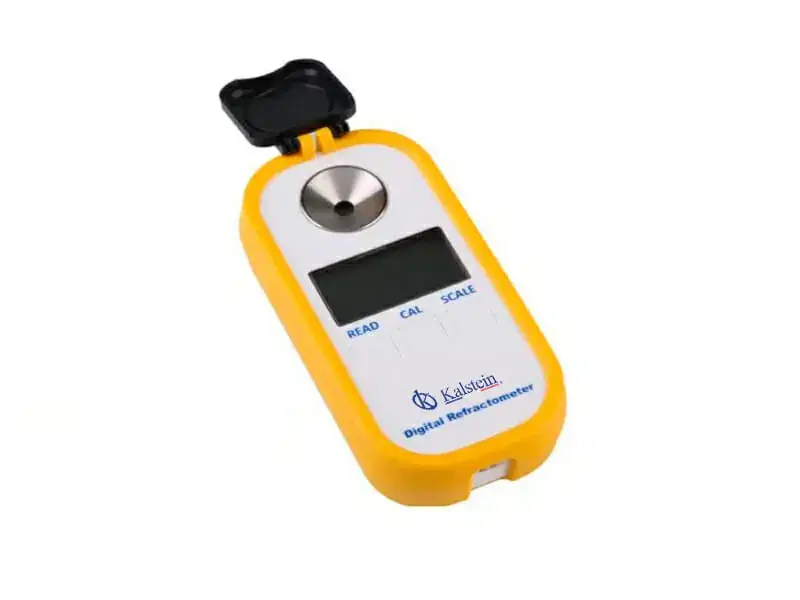
Applications of Digital BRIX Refractometers in University Research Projects
In the realm of university research, the precision and reliability of measuring instruments are paramount. Digital BRIX Refractometers have emerged as essential tools in various academic projects, particularly in studies involving sugar concentration and overall solution analysis. This article delves into the multiple models of Digital BRIX Refractometers, their specifications, and their practical applications in university research.
Understanding Digital BRIX Refractometers
Digital BRIX Refractometers are specialized devices designed to measure the concentration of soluble solids in liquid solutions, typically expressed in degrees Brix. They are widely used in food science, chemistry, and agricultural studies. The devices come equipped with Automatic Temperature Compensation (ATC), enhancing their reliability in varying environmental conditions.
Comparison of Available Models
| Model | Measurement Range | Minimum Division | Accuracy | Best for |
|---|---|---|---|---|
| YR05944 | Brix: 0.0-50.0% | 0.10% | ±0.2% | Fruit juices and syrups |
| YR05945 | Brix: 0.0-90.0% | 0.10% | ±0.2% | High sugar content solutions |
| YR05946 | Refractive Index: 1.3330-1.5177nD | 0.0001nD | ±0.0003nD | Precise refractive index measurements |
| YR05947 | Dextran: 0.0-10.6% | 0.10% | ±0.2% | Research on dextran solutions |
| YR05948 | Fructose: 0.0-68.9% | 0.10% | ±0.2% | Fructose concentration studies |
| YR05949 | Glucose: 0.0-59.9% | 0.10% | ±0.2% | Glucose analysis in food products |
Applications in Academic Research Projects
Digital BRIX Refractometers play a crucial role in academic research, especially in projects focused on food science, agriculture, and material analysis. For instance, the YR05944 model is ideal for measuring the sugar content in fruit juices and syrups, making it a valuable tool for food chemistry studies. Similarly, the YR05945 model, with a measurement range up to 90% Brix, can assist in research requiring high sugar content solutions.
Moreover, these devices are not limited to just food sciences; they are also instrumental in agricultural studies where sugar levels in crops can indicate health and yield potential. The precise measurements provided by these instruments aid researchers in developing better agricultural practices and improving crop quality.
Common Mistakes and How to Avoid Them
In the pursuit of accuracy, researchers often make common errors when using Digital BRIX Refractometers. One prevalent mistake is neglecting to calibrate the device before use, which can lead to erroneous readings. Always refer to the manufacturer’s guidelines for calibration procedures.
Another mistake is improper sample temperature management. Since temperature affects the refractive index, ensuring the sample is within the optimal range (typically 0-40°C) is critical for accurate results. Make sure to allow your samples to reach room temperature before measurement.
Optimizing Research with Digital BRIX Refractometers
To leverage the full potential of Digital BRIX Refractometers, integrating them into a broader research framework is essential. For example, researchers can combine Brix measurements with pH testing and titration to gain a comprehensive understanding of a solution’s properties. This holistic approach can significantly enhance the quality and applicability of research findings.
Utilizing these refractometers in collaborative research projects among students can also promote hands-on learning and improve practical skills. Scheduling shared access to these instruments can enhance the efficiency of research activities while fostering teamwork.
How Digital BRIX Refractometers Support Thesis-Grade Reproducibility
In academic settings, reproducibility is a cornerstone of scientific research. Digital BRIX Refractometers, such as the YR05946, provide consistent and reliable measurements that are essential for replicating experiments. Proper documentation of measurement protocols and results is vital for ensuring that other researchers can reproduce your findings accurately.
To support reproducibility, researchers should consider implementing a standardized operating procedure (SOP) for using the refractometers. This SOP should include calibration methods, sample preparation instructions, and data recording practices to maintain consistency across different studies.
Enhancing Research Through Cost-Effective Solutions
The investment in Digital BRIX Refractometers can yield significant returns in academic research. By accurately measuring Brix levels, researchers can gather data that supports grant applications and funding proposals. For example, the cost of a YR05945 model, priced at $95.00, can be justified through the enhanced quality of research outputs and the potential for obtaining additional funding.
Moreover, by reducing laboratory waste through accurate measurement of sugar concentrations, researchers can adhere to sustainability practices, further appealing to funding bodies focused on environmental impact.
Frequently Asked Questions
How can Digital BRIX Refractometers improve sugar analysis in academic research?
Digital BRIX Refractometers, such as the YR05944, enhance sugar analysis by providing precise measurements of soluble solids in solutions, which is crucial for accurate research outcomes in food science.
What are the ideal temperature settings for using Digital BRIX Refractometers?
Using Digital BRIX Refractometers like the YR05945 requires maintaining sample temperatures between 0-40°C to ensure accurate readings, benefiting various academic projects.
Which Digital BRIX Refractometer is best for measuring fructose concentration in university research?
The YR05948 model is specifically designed for measuring fructose concentrations, making it ideal for research projects focused on sweeteners and carbohydrate analysis.
How can I ensure accurate results when using a Digital BRIX Refractometer?
To ensure accuracy with models like the YR05949, always calibrate the device before use and manage sample temperatures appropriately to avoid measurement errors.
What role do Digital BRIX Refractometers play in agricultural research?
In agricultural research, Digital BRIX Refractometers like the YR05946 help measure sugar levels in crops, providing insights into plant health and potential yield.
How do Digital BRIX Refractometers contribute to thesis-grade reproducibility?
Models like the YR05947 provide consistent measurements, essential for reproducibility in academic research, ensuring that experiments can be reliably replicated.
Which Digital BRIX Refractometer is most cost-effective for university labs?
The YR05945 offers a great balance of functionality and cost, priced at $95.00, making it an excellent choice for budget-conscious university labs.
How can integrating Digital BRIX Refractometers benefit collaborative research projects?
Integrating models like the YR05944 into collaborative research projects promotes hands-on experience and efficient resource sharing among students and researchers.
If you are looking for a fusion of innovation and quality, you have come to the right place. At Kalstein, we offer you the luxury of exploring our exclusive catalog of laboratory equipment. We manufacture every device to the highest standards of excellence. Our intuitive and seamless online purchasing channels are designed for your convenience, securing the most competitive prices. Hesitate no longer — we bring science to life, it is time to become part of our community.