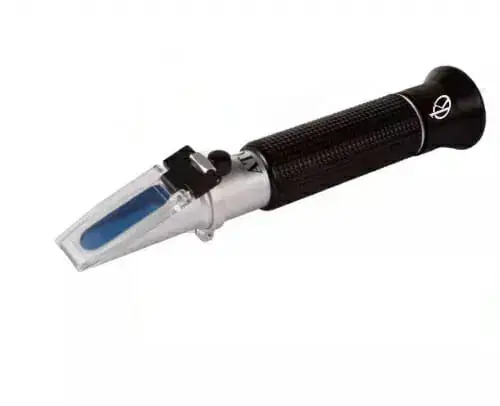
How to Utilize Wine Refractometers in Academic Research Projects
Wine refractometers are essential tools in academic research, particularly in fields that study fermentation and beverage science. These instruments allow researchers to measure the sugar content in a liquid, providing crucial data for various experiments. This article will explore how wine refractometers work, their applications in university research, and a comparison of available models to aid in effective decision-making for academic projects.
Understanding Wine Refractometers and Their Relevance in Research
Wine refractometers provide a fast and precise measurement of sugar concentration in liquids, which is vital for studies involving fermentation processes. By measuring the index of refraction, these devices can indicate the sugar levels present, which are crucial in determining the potential alcohol content post-fermentation. In academic research, these measurements can lead to a deeper understanding of fermentation kinetics, product quality, and process optimization.
Moreover, the ability to conduct such measurements accurately and quickly introduces a significant advantage in research settings, where time and accuracy are critical. This capability allows researchers to carry out experiments with greater efficiency, potentially leading to more innovative findings and conclusions.
Comparison of Available Models
| Model | Measurement Range | Minimum Division | Accuracy | ATC | Material |
|---|---|---|---|---|---|
| YR05931 | 0-80% v/v | 1% v/v | ±1% v/v | No | Aluminum |
| YR05932 | 0-25% Vol, 0-40% Brix | 0.2% Vol, 0.2% Brix | ±0.2% Vol, ±0.2% Brix | Yes | Aluminum |
| YR05933 | 0-25% Vol, 0-170 °Oe | 0.2% Vol, 1 °Oe | ±0.2% Vol, ±1 °Oe | Yes | Aluminum |
| YR05934 | 0-20% Baume, 0-25% Vol | 0.2% Baume, 0.2% Vol | ±0.2% Baume, ±0.2% Vol | Yes | Aluminum |
| YR05935 | 0-20% Baume, 0-25% Vol | 0.2% Baume, 0.2% Vol | ±0.2% Baume, ±0.2% Vol | Yes | Aluminum |
| YR05936 | 0-80% v/v | 1% v/v | ±1% v/v | No | Aluminum |
Using Wine Refractometers in Academic Research
In academic settings, wine refractometers can be employed in various research tasks, such as analyzing fermentation processes or studying the impact of different sugars on yeast behavior. These tools are not only valuable for wine studies but can also be utilized in food science, biotechnology, and agricultural research. By measuring the sugar concentration, researchers can assess the efficiency of fermentation, which can lead to advancements in production methods or even the development of new products.
Common Mistakes and How to Avoid Them
When using wine refractometers in research, common mistakes include failing to calibrate the instrument correctly or not accounting for temperature variations. It's essential to ensure that the refractometer is calibrated according to the manufacturer's specifications before each use. Additionally, researchers must be aware of the temperature at which measurements are taken, as refractive indices can change with temperature. Using models equipped with automatic temperature compensation (ATC), such as the YR05932, can help mitigate these issues.
Detailed Applications of Wine Refractometers in University Research
Research in Fermentation Processes
In the study of fermentation, wine refractometers are key to measuring the sugar content in must before fermentation and monitoring its decline during the process. Understanding how sugar content affects yeast activity allows researchers to optimize fermentation conditions for various beverage productions, leading to higher quality results.
Quality Control in Beverage Production
Quality assurance is another critical application of wine refractometers in academic research. By using models like the YR05934, researchers can ensure that the beverage maintains its quality throughout production. Monitoring sugar content helps in adjusting the fermentation process to meet desired specifications and standards.
Exploring Sugar Conversion Rates
Researchers can also utilize these instruments to explore conversion rates of sugar to alcohol in different yeast strains. This information is valuable for selecting optimal yeast for specific fermentation goals, enhancing the quality and taste of the final product.
Frequently Asked Questions
What is the measurement range of the YR05932 wine refractometer for academic research?
The YR05932 wine refractometer has a measurement range of 0-25% Volume and 0-40% Brix. This flexibility makes it ideal for academic research involving sugar analysis in various liquid samples.
How does the automatic temperature compensation feature benefit the YR05934 model?
The YR05934 model features automatic temperature compensation, which adjusts the reading based on the sample's temperature. This ensures accurate measurements essential for research in academic settings where precise data is crucial.
Why is it important to calibrate a wine refractometer before use in experiments?
Calibrating a wine refractometer, like the YR05931, before use is critical to ensure accuracy in measurements. Calibration prevents discrepancies in data that could lead to erroneous conclusions in academic research.
Which wine refractometer model is best for measuring sugar content in beverages?
The YR05932 is highly recommended for measuring sugar content in beverages, as it covers both 0-25% Volume and 0-40% Brix, providing comprehensive data for academic beverage studies.
How can wine refractometers aid in fermentation process studies?
Wine refractometers, such as the YR05933, help monitor sugar levels throughout fermentation, enabling researchers to understand yeast behavior and optimize fermentation parameters for various projects.
What factors should researchers consider when selecting a wine refractometer?
Researchers should consider factors like measurement range, accuracy, and the presence of automatic temperature compensation when selecting a wine refractometer for their specific academic needs.
Can the YR05936 model be used in educational laboratories for teaching purposes?
Yes, the YR05936 model can be effectively used in educational laboratories for teaching purposes, providing students with hands-on experience in measuring sugar concentrations in various liquids.
How do wine refractometers impact the reproducibility of experimental results in academic research?
By providing precise measurements of sugar content, wine refractometers enhance the reproducibility of results in academic research, which is critical for validating findings and ensuring quality in scientific studies.
If you are looking for a fusion of innovation and quality, you have come to the right place. At Kalstein, we offer you the luxury of exploring our exclusive catalog of laboratory equipment. We manufacture every device to the highest standards of excellence. Our intuitive and seamless online purchasing channels are designed for your convenience, securing the most competitive prices. Hesitate no longer — we bring science to life, it is time to become part of our community.