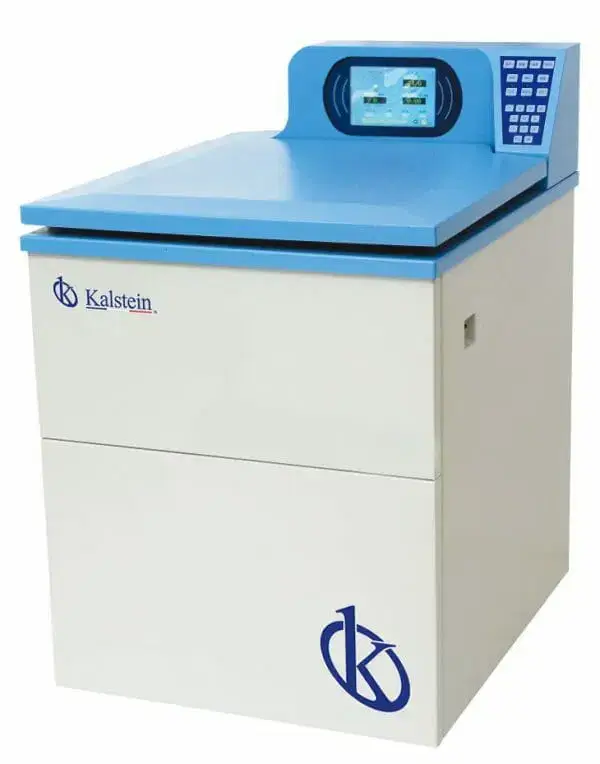
Understanding the Operating Principle and Scientific Foundations of the YR0111-3-1 High Speed Refrigerated Centrifuge
The YR0111-3-1 High Speed Refrigerated Centrifuge is an advanced laboratory tool designed for efficient particle separation in complex samples. This article delves into the operating principles and scientific foundations that make this centrifuge a critical instrument in laboratories, particularly in the fields of biotechnology, clinical research, and advanced chemistry.
Technological Overview of YR0111-3-1
The YR0111-3-1 centrifuge operates on the principles of centrifugal force, which is the force that acts on a mass moving in a circular path. This force is directed outward from the center of rotation and is generated through the rotation of the centrifuge's rotor. The YR0111-3-1 is capable of reaching speeds of up to 22,000 revolutions per minute (rpm) and can generate relative centrifugal forces (RCF) of up to 52,000 x g. These specifications allow for the effective separation of particles based on their size, shape, and density.
Scientific Principles Behind Centrifugation
The core scientific principle behind centrifugation is the buoyancy and sedimentation of particles in a medium. As the centrifuge spins, heavier particles move towards the bottom of the tube, forming a pellet, while lighter particles remain in the supernatant fluid. This principle is quantitatively described by the formula:
RCF = (1.118 x r x (RPM/1000)^2)
In this formula, RCF is the relative centrifugal force, r is the radius of the rotor in centimeters, and RPM is the revolutions per minute. Understanding this relationship allows researchers to optimize their protocols for various applications.
Design Features Contributing to Performance
The design of the YR0111-3-1 incorporates several features that enhance its performance. The microprocessor-controlled system ensures stable operation and allows for real-time adjustments to RPM and RCF. Additionally, the refrigeration system, capable of cooling samples to temperatures between -20 °C and +40 °C, is critical for protecting sensitive biomolecules during centrifugation.
Furthermore, the high-torque variable AC motor guarantees consistent and powerful performance, which is essential when dealing with advanced laboratory analyses. The robust construction of the centrifuge, including a stainless steel chamber, adds to its durability and reliability.
Technical Specifications of YR0111-3-1
| Model | YR0111-3-1 |
|---|---|
| Max Speed | 22,000 rpm |
| Max RCF | 52,000 x g |
| Max Capacity | 500 ml x 6 |
| Speed Accuracy | ± 50 r/min |
| Temperature Range | -20 ~ +40 °C |
| Temperature Accuracy | ± 1 °C |
| Compressor Unit | French Tecumseh compressor, R404a |
| Noise Level | < 65 dB(A) |
| Power Supply | 110V / 60Hz, 220V/50 Hz |
| Dimensions (L x W x H) | 710 x 840 x 1,140 mm |
| Net Weight | 280 Kg |
Applications in Various Fields
The YR0111-3-1 centrifuge is extensively used in various laboratory environments. In clinical laboratories, it is vital for the separation of blood components, which aids in diagnostics and treatment planning. In biotechnology, researchers utilize the centrifuge for purifying proteins and nucleic acids, essential for experimentation and development. Furthermore, in advanced chemistry, the centrifuge assists in isolating compounds from mixtures for analytical purposes.
Maintaining Your YR0111-3-1 for Optimal Performance
Regular maintenance of the YR0111-3-1 is crucial for prolonging its lifespan and ensuring consistent performance. This includes routine checks of the refrigeration system, monitoring for discrepancies in temperature control, and performing software updates as necessary. It is recommended to calibrate the system periodically and inspect the rotor for wear and tear.
Frequently Asked Questions
What is the maximum capacity of the YR0111-3-1 centrifuge?
The YR0111-3-1 centrifuge has a maximum capacity of 500 ml x 6, allowing for the simultaneous processing of multiple samples.
Can the temperature be adjusted during operation?
Yes, the YR0111-3-1 allows for precise temperature adjustments ranging from -20 °C to +40 °C, which is essential for protecting sensitive samples.
Is the YR0111-3-1 suitable for inexperienced users?
Absolutely! The intuitive touch panel and design features of the YR0111-3-1 make it user-friendly for operators of all experience levels.
What safety features are incorporated into the YR0111-3-1?
The YR0111-3-1 is equipped with advanced safety systems that include over-speed protection, temperature regulation, and imbalance detection, ensuring safe operation.
How often should maintenance be performed on the YR0111-3-1?
Regular maintenance should be performed according to the manufacturer's guidelines, typically on a monthly basis, to ensure optimal performance and longevity.
If you are looking for a fusion of innovation and quality, you have come to the right place. At Kalstein, we offer you the luxury of exploring our exclusive catalog of laboratory equipment. We manufacture every device to the highest standards of excellence. Our intuitive and seamless online purchasing channels are designed for your convenience, securing the most competitive prices. Hesitate no longer — we bring science to life, it is time to become part of our community.