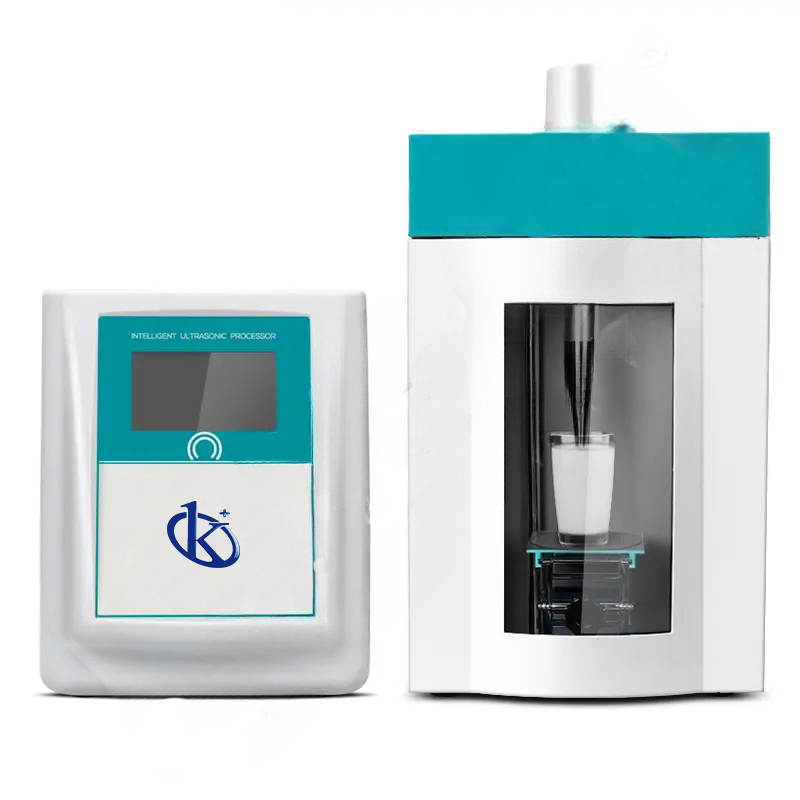
Ultrasonic Homogenizers: Practical Applications and Techniques 2026
Ultrasonic homogenizers are essential tools in various laboratory settings, particularly in biotechnology, research, and academic institutions. In 2026, these devices continue to provide innovative solutions for sample preparation, emulsification, and cell disruption. This article delves into the applications, techniques, and best practices associated with ultrasonic homogenizers, focusing on how laboratory professionals can maximize the utility of these devices.
What is it used for in 2026
In 2026, ultrasonic homogenizers are widely utilized for:
- Emulsification of liquids, creating stable mixtures of immiscible phases.
- Disruption of cells for the extraction of proteins, nucleic acids, and other intracellular components.
- Deagglomeration of powders to achieve uniform particle size distribution.
- Preparation of nanomaterials and emulsions for drug delivery systems.
- Homogenization of food samples for quality control and analysis.
History and evolution of the technology
The technology of ultrasonic homogenization dates back to the mid-20th century. Initially used for industrial purposes, the application in laboratories evolved as researchers recognized the benefits of ultrasonic waves in sample processing. Over the decades, advances in electronics and computer technology have enhanced the precision and control of ultrasonic homogenizers, leading to their widespread adoption in various fields such as pharmaceuticals, biotechnology, and environmental science.
How to use it step by step
Using an ultrasonic homogenizer involves several key steps:
- Preparation: Ensure that all necessary materials and samples are ready. Select the appropriate probe based on the volume and type of sample.
- Setup: Connect the ultrasonic homogenizer to a power source and configure the settings, including power, time, and pulse duration.
- Insert the sample: Place the sample in a suitable container, ensuring it is compatible with ultrasonic processing.
- Run the homogenizer: Activate the device, monitoring the process. Adjust the settings as necessary to achieve the desired level of homogenization.
- Post-processing: After completion, clean the probe and surrounding area, and analyze the sample as required.
Best techniques and protocols
To achieve optimal results with ultrasonic homogenizers, the following techniques and protocols are recommended:
- Use short bursts of ultrasonic waves to prevent overheating of samples.
- Maintain a constant temperature by using cooling baths or ice to preserve the integrity of heat-sensitive samples.
- Adjust the power settings according to the viscosity and characteristics of the sample being processed.
- Employ appropriate probe sizes and types to match the sample volume for efficient processing.
- Conduct preliminary tests to determine the optimal processing time for each type of sample.
Practical applications by laboratory type
Different laboratory types utilize ultrasonic homogenizers for various applications:
Biotechnology Laboratories
Used for cell disruption and extraction of biomolecules.
Food Safety Laboratories
Emulsification and homogenization of food samples for quality control.
Pharmaceutical Laboratories
Preparation of nano-emulsions and drug formulations.
Environmental Laboratories
Sample preparation for analysis of pollutants and contaminants.
Regulations, standards and certifications
Laboratories utilizing ultrasonic homogenizers must adhere to various regulations and standards, including:
- ISO 9001 for quality management systems.
- Good Laboratory Practice (GLP) standards for laboratory operations.
- FDA regulations for pharmaceutical and food applications.
Comparison with alternative technologies
Ultrasonic homogenizers offer several advantages over alternative technologies:
- Mechanical Homogenizers: Provide less control over temperature and may require longer processing times.
- High-Pressure Homogenizers: Generally more expensive and require more maintenance compared to ultrasonic units.
- Blenders: Less effective for emulsification and particle size reduction in certain applications.
Comparison of available models
| Model | Best for | Key specs | Recommended use case |
|---|---|---|---|
| YR05015 | Small volume applications | Power: 1.5 – 150W, Mixing Capacity: 0.1 – 150 ml | Sample preparation for proteomics studies |
| YR05016 | Medium volume applications | Power: 2-5 – 250 W, Mixing Capacity: 0.1 – 300 ml | Emulsification in food science |
| YR05017 | Higher efficiency | Power: 10 – 650 W, Mixing Capacity: 0.1 – 500 ml | Cell lysis in molecular biology |
| YR05018 | Large volume applications | Power: 10 – 900 W, Mixing Capacity: 0.1 – 600 ml | Nanomaterial preparation |
| YR05019 | High throughput | Power: 20 – 1 200W, Mixing Capacity: 1 – 1 000 ml | Pharmaceutical compound formulation |
| YR05020 | Very high efficiency | Power: 50 – 1 800W, Mixing Capacity: 1 – 1 200 ml | Advanced bioprocessing applications |
Common mistakes and how to avoid them
Laboratory professionals often make mistakes when using ultrasonic homogenizers, which can affect results. Here are some common mistakes and tips to avoid them:
- Using incorrect probe size: Always select a probe that matches the sample volume.
- Excessive processing time: Monitor the sample and avoid overheating by using bursts instead of continuous operation.
- Poor sample preparation: Ensure samples are prepared and compatible with ultrasonic processing.
Maintenance, calibration and good practices 2026
To maintain the efficiency of ultrasonic homogenizers, regular maintenance and calibration are essential:
- Clean probes and containers after each use to prevent contamination.
- Calibrate the device periodically according to the manufacturer’s guidelines.
- Inspect components for wear and replace as necessary to ensure optimal performance.
Cost-benefit analysis 2026
Investing in ultrasonic homogenizers is cost-effective in the long term, considering:
- Reduced processing times leading to increased productivity.
- Versatility in applications across various laboratory types.
- Long-lasting technology with low maintenance costs.
Frequently asked questions
What are the key factors to consider when choosing an ultrasonic homogenizer?
When selecting an ultrasonic homogenizer, consider the sample volume, required power, application type, and budget. It's essential to choose a model that fits your specific laboratory needs.
How do I know if my sample is suitable for ultrasonic homogenization?
Most samples can be processed using ultrasonic homogenization; however, it is crucial to assess the viscosity and thermal sensitivity of your sample beforehand. Conducting preliminary tests can help determine the suitability.
Can ultrasonic homogenizers produce consistent results for different types of samples?
Yes, ultrasonic homogenizers can achieve consistent results across various types of samples when the appropriate settings are used. Adjusting the power and processing time helps in optimizing results for different sample types.
How can I ensure the longevity of my ultrasonic homogenizer?
Regular maintenance, such as cleaning the probe and calibrating the machine, as well as following the manufacturer's guidelines for use, can significantly enhance the lifespan of your ultrasonic homogenizer.
What are the safety precautions when using an ultrasonic homogenizer?
Ensure proper protective equipment is worn, including gloves and goggles. Always handle the device with care, and never operate it without the probe submerged in liquid to prevent damage.
How often should I calibrate my ultrasonic homogenizer?
It is recommended to calibrate your ultrasonic homogenizer at least once every six months, or more frequently if used regularly, to maintain accuracy and performance.
If you are looking for a fusion of innovation and quality, you have come to the right place. At Kalstein, we offer you the luxury of exploring our exclusive catalog of laboratory equipment. We manufacture every device to the highest standards of excellence. Our intuitive and seamless online purchasing channels are designed for your convenience, securing the most competitive prices. Hesitate no longer — we bring science to life, it is time to become part of our community.