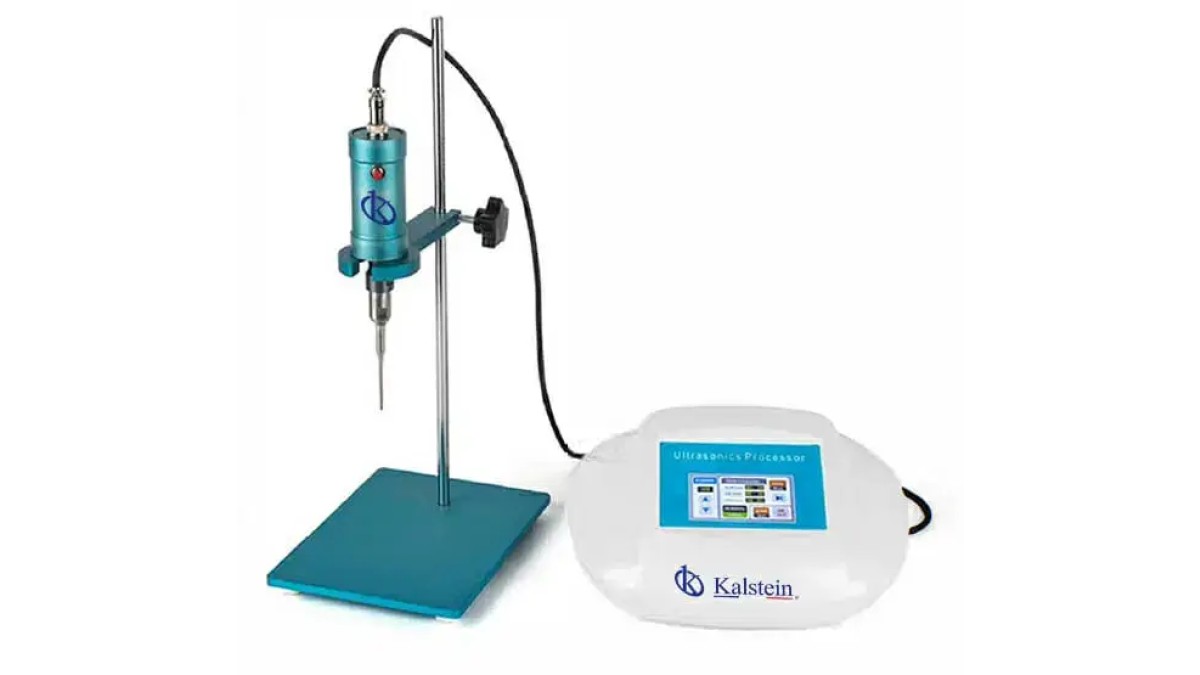
Ultrasonic Homogenizers: Practical Applications and Techniques 2026
Ultrasonic homogenizers are pivotal instruments in modern laboratories, particularly for liquid processing. These versatile devices utilize ultrasonic waves to achieve uniform mixing, emulsification, and the disruption of cells. In 2026, the advancements in this technology have made ultrasonic homogenizers more efficient and user-friendly, catering to a wide range of applications across various laboratory settings.
What is it used for in 2026
In 2026, ultrasonic homogenizers are extensively used for:
- Cell Disruption: Breaking down animal, plant, and viral cells for further analysis.
- Emulsification: Creating stable emulsions in food, pharmaceutical, and cosmetic formulations.
- Homogenization: Achieving uniform distributions of particles in liquids, which is vital in various formulations.
- Extraction: Extracting bioactive compounds from plant and animal tissues.
- Deagglomeration: Reducing the size of agglomerates in solid suspensions.
- Cleaning and Degassing: Preparing samples by removing air bubbles and contaminants.
History and evolution of the technology
The use of ultrasonic technology dates back to the early 20th century. Initially employed in sonar applications, its potential for laboratory processes was recognized in the 1950s. Over the decades, ultrasonic homogenizers have evolved to become more sophisticated, with digital controls, enhanced power outputs, and user-friendly interfaces. Today, they incorporate advanced features such as real-time monitoring and automated calibration, making them essential tools for modern laboratories.
How to use it step by step
Using an ultrasonic homogenizer effectively involves a few key steps:
- Preparation: Prepare your samples, ensuring they are in appropriate containers that can withstand ultrasonic treatment.
- Setup: Connect the ultrasonic probe to the homogenizer and set it up according to the manufacturer's instructions.
- Settings Adjustment: Adjust the power, frequency, and duration settings based on the sample type and desired outcome.
- Homogenization: Immerse the probe in the sample and start the homogenizer. Monitor the process to ensure optimal results.
- Post-Processing: After homogenization, carefully remove the sample and clean the probe according to the recommended procedures.
Best techniques and protocols
To achieve the best results with ultrasonic homogenizers, consider the following techniques:
- Calibration: Regularly calibrate your device to ensure accuracy and consistency.
- Temperature Control: Implement cooling systems if necessary, as ultrasonic treatment can raise sample temperatures.
- Sequential Processing: For larger volumes, process samples in batches to maintain quality.
- Use of Proper Probes: Select the appropriate probe size for your sample volume to optimize efficiency.
- Monitoring: Utilize real-time monitoring features to adjust settings dynamically during the process.
Practical applications by laboratory type
Ultrasonic homogenizers find applications in various laboratory types, including:
- Biotechnology: Cell lysis and extraction of DNA/RNA.
- Pharmaceuticals: Formulation of emulsions and suspensions.
- Food Science: Emulsifying ingredients for sauces and dressings.
- Cosmetics: Creating stable emulsions for creams and lotions.
- Environmental Testing: Sample preparation for analysis of pollutants and contaminants.
Regulations, standards and certifications
In 2026, laboratories utilizing ultrasonic homogenizers must adhere to various regulations and standards:
- ISO Standards: Compliance with ISO 9001 for quality management.
- Good Laboratory Practices (GLP): Ensuring procedures meet FDA and other regulatory requirements for laboratory work.
- Calibration Certifications: Regular certification of equipment to maintain operational integrity.
Comparison with alternative technologies
When comparing ultrasonic homogenizers with alternative technologies, several points stand out:
- Mechanical Homogenizers: Generally require more manual effort and can produce inconsistent particle sizes.
- High-Pressure Homogenizers: Often more expensive and may require more maintenance, but can achieve finer particle sizes.
- Magnetic Stirring: Less effective for cell lysis and emulsification compared to ultrasonic methods.
Comparison of available models
| Model | Best for | Key specs | Recommended use case |
|---|---|---|---|
| YR05829 | General liquid processing | Power: 5-150 W, Capacity: 0.1-50 ml, Frequency: 19-25 KHz | Best for small-scale applications and sample preparation. |
| YR05830 | Liquid emulsification | Power: 5-250 W, Capacity: 0.5-100 ml, Frequency: 19-25 KHz | Ideal for emulsifying and homogenizing small volumes of liquid. |
| YR05831 | High-throughput processing | Power: 5-400 W, Capacity: 0.5-300 ml, Frequency: 19-25 KHz | Suitable for larger sample sizes and more demanding applications. |
| YR05831-op1 | Versatile applications | Power: 5-400 W, Capacity: 0.5-300 ml, Frequency: 19-25 KHz | Great for varying types of sample processing needs. |
| YR05831-op2 | Budget-friendly option | Power: 5-400 W, Capacity: 0.5-300 ml, Frequency: 19-25 KHz | Effective for laboratories with budget constraints. |
| YR05832 | Advanced applications | Power: 650 W max, Capacity: 0.2-500 ml, Frequency: 20-25 KHz | Best for complex emulsions and samples requiring high power. |
Common mistakes and how to avoid them
Several common mistakes can hinder the effectiveness of ultrasonic homogenizers:
- Incorrect Probe Size: Always choose the appropriate probe diameter for your sample volume.
- Excessive Sample Temperature: Monitor temperatures closely to prevent denaturation of sensitive samples.
- Inadequate Mixing: Ensure thorough mixing before ultrasonic treatment to achieve uniform results.
- Neglecting Calibration: Regular calibration is essential for maintaining precision and accuracy.
Maintenance, calibration and good practices 2026
To ensure optimal performance of ultrasonic homogenizers, adhere to the following maintenance practices:
- Regular Calibration: Schedule routine calibrations to align with manufacturer specifications.
- Cleaning: Clean probes and accessories after each use to prevent contamination.
- Inspection: Frequently inspect equipment for wear and damage to maintain operational integrity.
- Documentation: Keep detailed records of maintenance and calibration for compliance and quality assurance.
Cost-benefit analysis 2026
When considering the investment in ultrasonic homogenizers, evaluate costs against the benefits:
- Initial Investment: While initial costs can be high, the versatility and efficiency often justify the expense.
- Reduced Labor Costs: Automation and efficiency lead to significant savings in labor and processing time.
- Quality Improvement: Enhanced consistency and quality of results can significantly improve research outcomes.
- Return on Investment: With proper usage, the return on investment can be maximized through increased productivity.
Frequently asked questions
What factors should I consider when choosing an ultrasonic homogenizer?
Consider the sample size, type of application, power requirements, and available features such as temperature control and automation when selecting an ultrasonic homogenizer.
How do I avoid overheating during ultrasonic processing?
Monitor the temperature closely and use cooling systems if necessary to prevent overheating and potential damage to sensitive samples.
Can ultrasonic homogenizers be used for cell lysis?
Yes, ultrasonic homogenizers are highly effective for cell lysis in both animal and plant samples, aiding in the extraction of cellular components.
What maintenance routines are important for ultrasonic homogenizers?
Regular calibration, cleaning, and inspection of the equipment are essential maintenance routines to ensure optimal performance and longevity.
How can I maximize the efficiency of my ultrasonic homogenizer?
Optimize the settings based on the specific application, use appropriate probes, and ensure thorough mixing before processing to enhance efficiency.
Are there specific regulations I need to follow when using ultrasonic homogenizers in my lab?
Yes, compliance with ISO standards and Good Laboratory Practices (GLP) is essential to ensure safety and accuracy in laboratory settings.
How can I request a quote for an ultrasonic homogenizer?
You can easily request a quote by visiting our website and filling out the necessary details for your desired model.
If you are looking for a fusion of innovation and quality, you have come to the right place. At Kalstein, we offer you the luxury of exploring our exclusive catalog of laboratory equipment. We manufacture every device to the highest standards of excellence. Our intuitive and seamless online purchasing channels are designed for your convenience, securing the most competitive prices. Hesitate no longer — we bring science to life, it is time to become part of our community.