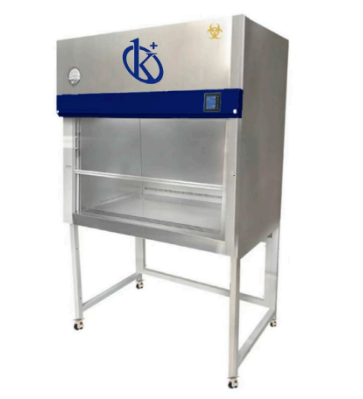
Site Requirements and Environmental Conditions for the YR0090C-SS Biological Safety Cabinet
The YR0090C-SS Biological Safety Cabinet is an essential piece of equipment for laboratories handling biological agents. To ensure its optimal performance and safety, specific environmental conditions and site requirements must be adhered to. This article delves into these requirements, aiming to guide laboratory personnel in setting up and maintaining the YR0090C-SS properly.
Understanding the YR0090C-SS
The YR0090C-SS is designed to protect laboratory personnel, the environment, and products from contamination when handling biohazardous materials. Its construction from stainless steel offers durability and easy disinfection, while its efficient airflow system maintains a controlled workspace. Understanding the site requirements is crucial for maximizing its effectiveness.
Technical Specifications of the YR0090C-SS
| Parameter | YR0090C-SS |
|---|---|
| Voltage | 220 V |
| Frequency | 50 HZ |
| Overall Dimensions | 1200*765*2000 MM |
| Operational Space | 1000*630*700 MM |
| Nominal Power | 1100 W |
| Airflow System | 360 M3/h |
| Noise Level | <67 dB (A) |
Environmental Conditions for Installation
For the YR0090C-SS to function effectively, it must be installed in an environment that meets specific conditions. Here are the critical environmental factors to consider:
- Operating Temperature: The cabinet should be kept in an environment with a temperature range of 15°C to 35°C to ensure proper operation.
- Humidity: Relative humidity should be below 75% to prevent condensation, which can affect the cabinet's function and microbial growth.
- Atmospheric Pressure: The cabinet requires an atmospheric pressure range of 70 kPa to 106 kPa to maintain effective airflow.
Space and Placement Requirements
The physical placement of the YR0090C-SS is crucial for its operation. Here are some key placement considerations:
- Clearance: Adequate clearance should be maintained around the cabinet to ensure proper ventilation and airflow. A minimum of 30 cm clearance is recommended on all sides.
- Level Surface: The cabinet must be placed on a level surface to ensure stability and proper airflow dynamics.
- Accessibility: Ensure that there is easy access to the cabinet for regular maintenance and filter replacements.
Electrical Requirements
The YR0090C-SS Biological Safety Cabinet requires a stable electrical supply for its operation:
- Power Supply: The cabinet operates on a 220V power supply with a frequency of 50Hz.
- Dedicated Circuit: It is advised to connect the cabinet to a dedicated circuit to avoid potential overloads that may lead to power fluctuations.
Ventilation and Exhaust Considerations
Effective venting is critical for maintaining the air quality within the laboratory. Key points include:
- Airflow Management: The cabinet recycles 70% of the air internally and exhausts 30%. Ensure that the exhaust is channeled appropriately to avoid re-entering the workspace.
- External Ventilation: If the laboratory environment has high levels of contaminants, consider connecting the cabinet to an external exhaust system to enhance safety.
Preparing the Site for the YR0090C-SS
Prior to installation, it's essential to conduct a site preparation checklist to ensure that all requirements are met:
| Site Preparation Checklist | Checklist Completed |
|---|---|
| Check temperature range (15-35°C) | Yes/No |
| Check humidity levels (<75%) | Yes/No |
| Ensure adequate clearance (30 cm) | Yes/No |
| Confirm electrical supply (220V, 50Hz) | Yes/No |
| Check airflow/exhaust management | Yes/No |
Frequently Asked Questions
What are the ideal environmental conditions for the YR0090C-SS?
The ideal environmental conditions for the YR0090C-SS include a temperature range of 15°C to 35°C, humidity levels below 75%, and an atmospheric pressure between 70 kPa to 106 kPa.
How much clearance is required around the YR0090C-SS?
A minimum clearance of 30 cm on all sides of the YR0090C-SS is recommended to ensure proper ventilation and airflow.
Can the YR0090C-SS operate in high humidity environments?
No, the YR0090C-SS should not operate in environments with humidity levels above 75%, as it can lead to condensation and affect the cabinet's performance.
What is the power requirement for the YR0090C-SS?
The YR0090C-SS operates on a power supply of 220V with a frequency of 50Hz. It is advisable to connect it to a dedicated circuit.
How does the YR0090C-SS manage airflow?
The YR0090C-SS recycles 70% of the air internally and exhausts 30%, ensuring a controlled and safe environment within the cabinet.
Is external ventilation necessary for the YR0090C-SS?
External ventilation is not necessary, but it may be beneficial in laboratories with high levels of contaminants to enhance safety.
What should I check before installing the YR0090C-SS?
Check the temperature and humidity levels, clearance around the unit, the electrical supply, and ensure that airflow and exhaust management are adequate.
If you are looking for a fusion of innovation and quality, you have come to the right place. At Kalstein, we offer you the luxury of exploring our exclusive catalog of laboratory equipment. We manufacture every device to the highest standards of excellence. Our intuitive and seamless online purchasing channels are designed for your convenience, securing the most competitive prices. Hesitate no longer — we bring science to life, it is time to become part of our community.