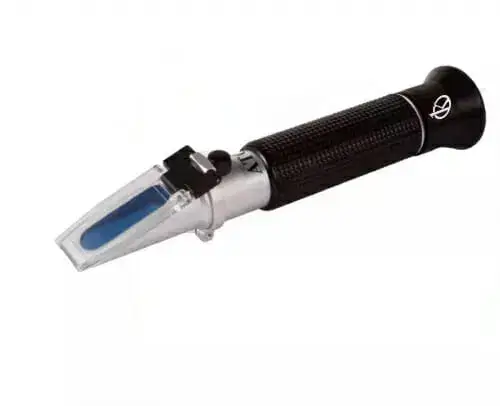
Salinity Refractometers: Best Techniques and Protocols 2026
Salinity refractometers are crucial instruments in various laboratory and industrial settings, particularly in marine biology, aquaculture, and environmental monitoring. In 2026, advancements in technology and understanding of protocols will enhance the effectiveness and accuracy of these instruments.
What is it used for in 2026
In 2026, salinity refractometers are primarily used for measuring the concentration of salt in aqueous solutions. They play a vital role in:
- Quality control in laboratories for clinical research and marine industries.
- Monitoring salinity levels in aquaculture to ensure optimal conditions for aquatic life.
- Environmental studies to assess the salinity of water bodies.
- Food industry applications, particularly in testing brine concentrations.
History and evolution of the technology
The evolution of salinity refractometers dates back to the early 20th century with the development of optical refractometry. Originally used in laboratories, these devices have evolved with technological advancements to yield more precise and user-friendly equipment. The integration of automatic temperature compensation (ATC) and digital readouts in modern refractometers has significantly improved their utility and accuracy.
How to use it step by step
Using a salinity refractometer involves several simple steps:
- Calibration: Begin by calibrating the refractometer using distilled water to ensure accurate readings.
- Sample Preparation: If necessary, dilute the sample to fit within the refractometer’s measurement range.
- Applying Sample: Place a few drops of the sample onto the prism of the refractometer.
- Close the Cover: Gently close the cover to avoid air bubbles.
- Reading the Scale: Look through the eyepiece to read the salinity level indicated on the scale.
Best techniques and protocols
In 2026, the best techniques for using salinity refractometers include:
- Ensuring stable temperatures during calibration and measurement since temperature fluctuations can alter readings.
- Regularly cleaning the prism to prevent contamination that may skew results.
- Using certified calibration standards for accurate results in compliance with laboratory protocols.
- Documenting results meticulously to maintain a record for quality assurance and traceability.
Practical applications by laboratory type
Salinity refractometers are utilized across various laboratory types:
- Marine Biology Labs: For monitoring salinity in aquatic environments.
- Aquaculture Facilities: To maintain optimal salinity levels for fish health.
- Environmental Agencies: For assessing the salinity of natural water bodies.
- Food Production Units: For ensuring the correct brine concentrations in food preservation.
Regulations, standards and certifications
In 2026, laboratories using salinity refractometers must adhere to strict regulations and standards, including:
- ISO 17025 for laboratory competence.
- Compliance with environmental regulations regarding water quality.
- Standards set by organizations such as ASTM for testing methods.
Comparison with alternative technologies
While salinity refractometers are highly effective, other technologies also serve similar purposes:
- Conductivity Meters: Measure electrical conductivity to estimate salinity.
- Salinity Sensors: Provide continuous monitoring for larger bodies of water.
- Hydrometers: Less precise but used for simple density measurements.
Comparison of available models
| Model | Best for | Key specs | Recommended use case |
|---|---|---|---|
| YR05887 | Measuring salinity levels in marine environments | Salinity: 2-4% (20-40ppt), Specific Gravity: 1.015-1.030 | Routine testing in aquaculture |
| YR05888 | General salinity testing | Salinity: 0-4% (0-40ppt), Specific Gravity: 1.000-1.030 | Environmental monitoring |
| YR05913 | Quality control in food production | Salinity: 2-4% (20-40ppt), Specific Gravity: 1.015-1.030 | Testing brine concentrations |
| YR05914 | Research and development labs | Salinity: 0-4% (0-40ppt), Specific Gravity: 1.000-1.030 | Laboratory experiments |
Common mistakes and how to avoid them
Common mistakes when using salinity refractometers include:
- Neglecting to calibrate before use — always calibrate the instrument under controlled conditions.
- Using contaminated or dirty samples — ensure cleanliness of the sample and instrument.
- Ignoring temperature effects — be aware of the temperature of both the sample and the environment.
Maintenance, calibration and good practices 2026
Regular maintenance should include:
- Cleaning the prism after each use with distilled water and a soft cloth.
- Calibrating at least monthly using a standard solution.
- Storing in a protective case to avoid damage when not in use.
Cost-benefit analysis 2026
Investing in a salinity refractometer can yield substantial benefits:
- Cost: The initial investment ranges around $9.50 for basic models.
- Benefits: Accurate readings ensure optimal conditions in aquaculture, enhancing yield and quality.
- Long-term Savings: Reduced losses due to improper salinity levels significantly outweigh the initial costs.
Frequently asked questions
How do I choose the right salinity refractometer for my lab?
Choosing the right salinity refractometer depends on your specific needs, including the salinity range you need to measure and the precision required for your applications. Evaluate models based on their specifications and applications.
Can I use the refractometer for measuring other liquids?
Salinity refractometers are specifically calibrated for saltwater solutions. Using them for other liquids can lead to inaccurate readings. For different solutions, consider using a general-purpose refractometer.
What should I do if my readings seem inaccurate?
If your readings appear inaccurate, first recalibrate your refractometer using a standard solution. If inaccuracies persist, check for contamination on the prism and ensure that the sample is in good condition.
How often should I perform maintenance on my refractometer?
Perform maintenance after each use, which includes cleaning the prism and calibrating at least once a month to ensure accurate results.
Is temperature compensation necessary when using a refractometer?
Yes, temperature compensation is critical as it affects the density of the liquid being measured. Models with automatic temperature compensation (ATC) are recommended for the most accurate results.
Where can I find reliable salinity refractometers for my lab?
Reliable salinity refractometers can be found at specialized laboratory equipment suppliers. Ensure you choose reputable brands known for quality and precision.
If you are looking for a fusion of innovation and quality, you have come to the right place. At Kalstein, we offer you the luxury of exploring our exclusive catalog of laboratory equipment. We manufacture every device to the highest standards of excellence. Our intuitive and seamless online purchasing channels are designed for your convenience, securing the most competitive prices. Hesitate no longer — we bring science to life, it is time to become part of our community.