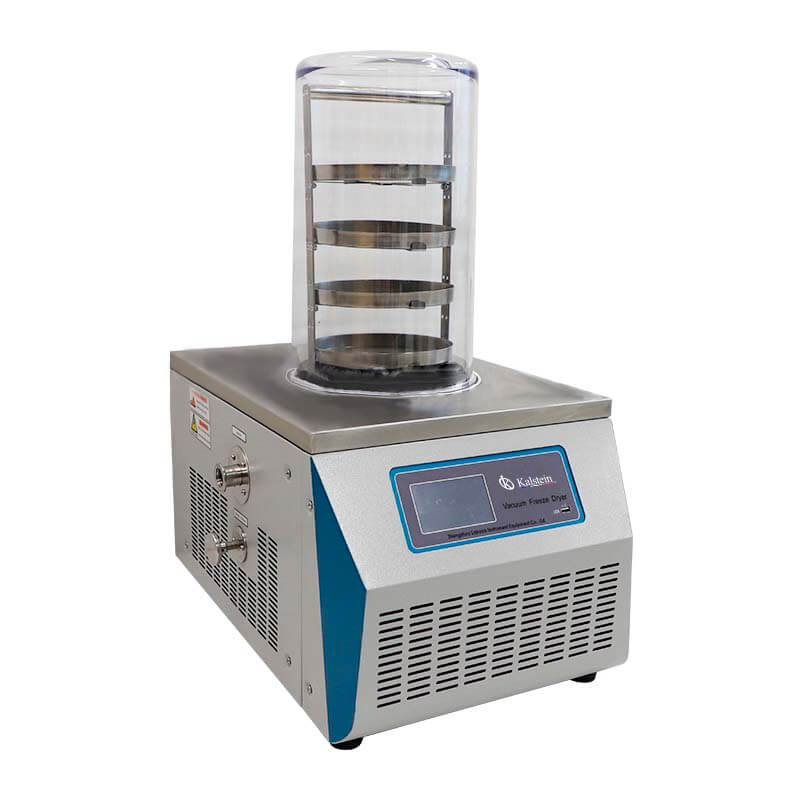
How to Evaluate ROI and Cost-Benefit Analysis for Benchtop Laboratory Freeze Dryers?
In laboratory settings, selecting the right equipment involves careful consideration of both return on investment (ROI) and cost-benefit analysis. Benchtop laboratory freeze dryers are essential for preserving biological materials, pharmaceuticals, and food products. This article delves into the criteria necessary for evaluating these devices, comparing various models, and ensuring optimal financial decision-making over their operational lifespan.
Understanding the Importance of ROI and Cost-Benefit Analysis
ROI quantifies the profitability of an investment, providing insight into the potential financial returns of purchasing a benchtop laboratory freeze dryer. A thorough cost-benefit analysis extends beyond initial costs, factoring in operational expenses, maintenance, and potential savings from reduced waste and improved efficiency. This holistic view helps laboratory managers make informed choices that align with their budgetary constraints and operational goals.
Key Factors Influencing the ROI of Benchtop Laboratory Freeze Dryers
The ROI of a benchtop laboratory freeze dryer is influenced by several key factors:
- Initial Purchase Price: The cost of the model itself, such as YR05186 ($1780.00), YR05187 ($1943.00), YR05188 ($2433.00), YR05189 ($2596.00), and YR05189-1 ($2433.00), sets the baseline for ROI calculations.
- Operational Efficiency: Efficiency metrics, including the ability to process samples, impact the speed of research and production timelines.
- Maintenance Costs: Regular maintenance and service costs can significantly affect long-term expenses and should be included in ROI assessments.
- Waste Reduction: Effective freeze drying minimizes waste, preserving materials for longer periods and reducing overall costs associated with disposal.
- Technical Specifications: Features such as temperature range and vacuum levels also influence operational efficiency.
Comparison of Available Models
| Model | CAPEX (USD) | Cost per Test (USD) | Payback Period (Months) | Recommended Scenario |
|---|---|---|---|---|
| YR05186 | 1780.00 | Estimated 10.00 | 12 | Small-scale lab environments |
| YR05187 | 1943.00 | Estimated 12.00 | 14 | Medium laboratories with diverse applications |
| YR05188 | 2433.00 | Estimated 15.00 | 16 | Research-focused labs requiring high capacity |
| YR05189 | 2596.00 | Estimated 18.00 | 18 | Industry-scale applications needing robustness |
| YR05189-1 | 2433.00 | Estimated 15.00 | 16 | Customizable labs needing specific features |
Common Mistakes and How to Avoid Them
When evaluating benchtop laboratory freeze dryers, laboratories often make several common mistakes that can adversely affect ROI:
- Ignoring Total Cost of Ownership: Focus solely on the purchase price without considering operational costs can lead to underestimating long-term expenses.
- Neglecting Maintenance Needs: Failing to account for maintenance requirements can result in higher unforeseen costs down the line.
- Overlooking Efficiency Features: Not analyzing performance metrics, such as drying time and energy consumption, may lead to selecting a less suitable model.
- Inadequate Training: Staff may not be trained properly on the equipment, leading to inefficient use and potentially increased operational costs.
Factors Affecting Cost-Benefit Analysis of Freeze Dryers
Several factors must be considered in the cost-benefit analysis of freeze dryers:
- Throughput Capacity: Evaluate how many samples can be processed in a single run; higher throughput often leads to lower costs per test.
- Energy Consumption: Models with lower energy requirements reduce operational costs significantly; for instance, the YR05186 operates on 700W.
- Space Requirements: The footprint of each model can impact laboratory layout and associated costs; for example, the YR05189 has a dimension of 460x625x(370+440) mm.
- Longevity of Equipment: Consider the expected lifespan of the freeze dryer, as a durable model may incur lower replacement costs over time.
Quantitative Analysis of Cost-Benefit for Laboratory Freeze Dryers
Effective cost-benefit analysis requires quantitative metrics. Below is an example table illustrating potential costs over five years for various models:
| Model | Expected Lifespan (Years) | Annual Maintenance Cost (USD) | Total Costs Over 5 Years (USD) |
|---|---|---|---|
| YR05186 | 10 | 100 | 1780 + (100*5) = 2280 |
| YR05187 | 10 | 120 | 1943 + (120*5) = 2443 |
| YR05188 | 10 | 150 | 2433 + (150*5) = 3183 |
| YR05189 | 10 | 180 | 2596 + (180*5) = 3196 |
| YR05189-1 | 10 | 150 | 2433 + (150*5) = 3183 |
Frequently Asked Questions
What are the key factors affecting ROI for benchtop laboratory freeze dryers?
ROI for benchtop laboratory freeze dryers is influenced by initial purchase price, operational efficiency, maintenance costs, and waste reduction. For example, if you purchase the YR05186 at $1780.00, you should also consider how its operational features will contribute to minimizing ongoing expenses.
How much energy does a benchtop freeze dryer consume during operation?
The energy consumption of benchtop freeze dryers varies by model. The YR05186, for instance, operates on 700W, making it relatively energy-efficient for laboratory use. This feature contributes significantly to the overall cost-effectiveness of the unit.
Why is maintenance important for freeze dryer cost-benefit analysis?
Maintenance is crucial because it directly impacts the operational lifespan and reliability of the equipment. For instance, if the YR05187 has an estimated annual maintenance cost of $120, this expense should be factored into the total cost calculations for accurate financial assessments.
How do different models compare in terms of throughput capacity?
Throughput capacity varies among models; for example, the YR05188 has a higher capacity for bulk processing compared to the YR05187. This difference can affect the cost per test, making it essential to select a model that aligns with your laboratory's processing needs.
What is the expected lifespan of benchtop laboratory freeze dryers?
Benchtop laboratory freeze dryers like the YR05189 typically have an expected lifespan of up to 10 years. This longevity is an essential factor in ROI and cost-benefit analysis, as longer-lasting equipment reduces replacement frequency and costs.
How do I calculate the total costs for a freeze dryer over five years?
Total costs can be calculated by adding the purchase price to the maintenance costs over the expected lifespan. For instance, for the YR05186, the total cost could be calculated as $1780 plus five years of maintenance costs, leading to an overall cost of $2280.
What is the importance of understanding operational efficiency in freeze dryers?
Understanding operational efficiency helps in evaluating the potential return on investment. A model like the YR05188, known for its higher efficiency, can drastically lower the cost per test, providing a better financial outlook for laboratories looking to maximize their investments.
If you are looking for a fusion of innovation and quality, you have come to the right place. At Kalstein, we offer you the luxury of exploring our exclusive catalog of laboratory equipment. We manufacture every device to the highest standards of excellence. Our intuitive and seamless online purchasing channels are designed for your convenience, securing the most competitive prices. Hesitate no longer — we bring science to life, it is time to become part of our community.