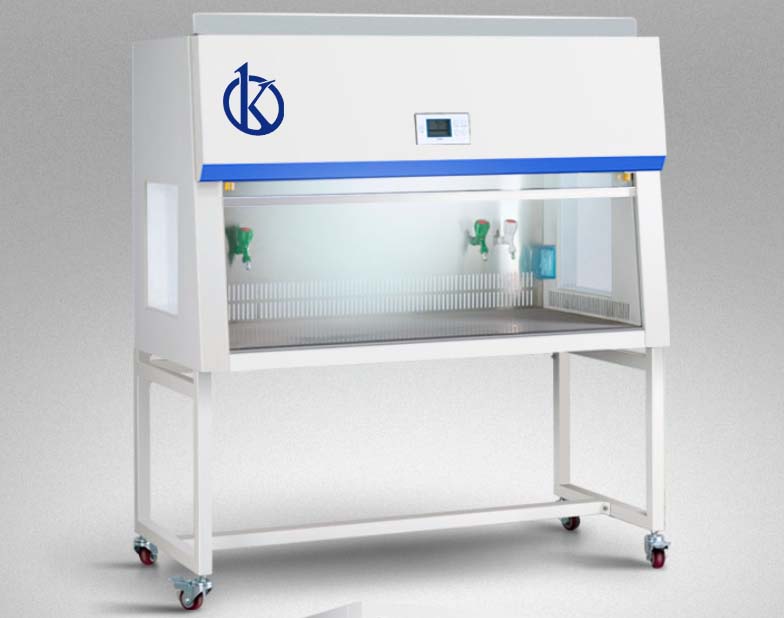
How to Implement Predictive Maintenance and Regular Calibration for Vertical Laminar Flow Clean Benches
In laboratory settings, maintaining sterile environments is crucial for the integrity of experiments and operations. Vertical laminar flow clean benches are essential tools for ensuring a dust-free and contaminant-free workspace. However, consistent performance relies heavily on effective maintenance strategies, particularly predictive maintenance and regular calibration. This article delves into best practices for implementing these strategies, specifically tailored to vertical laminar flow clean benches.
Understanding Predictive Maintenance and Its Importance
Predictive maintenance involves monitoring the condition of equipment to predict when maintenance should be performed. This approach minimizes downtime and prolongs the lifespan of the equipment. For vertical laminar flow clean benches, predictive maintenance focuses on identifying potential failures before they occur, ensuring that the laboratory maintains its operational efficiency.
Key Components of a Predictive Maintenance Program
To establish a robust predictive maintenance program for vertical laminar flow clean benches, consider the following components:
- Condition Monitoring: Utilize sensors and data analysis tools to track performance metrics such as airflow, vibration, and noise levels.
- Data Analysis: Regularly analyze data to identify trends and predict potential issues, ensuring optimal functioning of the clean benches.
- Scheduled Inspections: Conduct regular inspections of the equipment to ensure all components are functioning correctly.
Calibration Requirements for Vertical Laminar Flow Clean Benches
Regular calibration is essential to ensure that vertical laminar flow clean benches operate within specified performance parameters. Calibration typically involves adjusting and verifying the accuracy of measurement instruments to ensure they meet industry standards.
Recommended Calibration Intervals
Calibration intervals for vertical laminar flow clean benches typically depend on usage frequency and manufacturer recommendations. Commonly, these intervals are established as follows:
- Monthly: For high-use environments, perform calibration checks every month.
- Quarterly: Medium-use environments can follow a quarterly schedule.
- Annually: Low-use benches should be calibrated at least once a year.
Compliance with Industry Standards
Compliance with standards, such as ISO 14644-1, is crucial for vertical laminar flow clean benches. This standard specifies cleanliness levels based on the number of particles per cubic meter of air. Regular maintenance and calibration help ensure compliance with these standards, which is essential for laboratories working in regulated environments.
Comparison of Available Models
| Model | Specifications | Best Applications |
|---|---|---|
| YR05267-1 | ISO 14644.1 Class 5, 0.3-0.6 m/s wind speed, 400W power | Biotechnology, pharmaceuticals, electronic precision |
| YR05734 | Class 100, 0.25-0.45 m/s wind speed, 220V power | Aseptic environments in medical and health engineering |
| YR05735 | Class 100, 0.25-0.45 m/s wind speed, 220V power | Aseptic environments in scientific experiments |
| YR05736 | Class 100, 0.25-0.45 m/s wind speed, 100W power | Laboratories requiring stringent cleanliness |
| YR05737 | Class 100, 0.25-0.45 m/s wind speed, 500W power | High-demand laboratory environments |
| YR05738 | Class 100, 0.25-0.45 m/s wind speed, 400W power | Medical treatment, chemical experiments |
Common Mistakes and How to Avoid Them
In implementing predictive maintenance and calibration for vertical laminar flow clean benches, common mistakes include:
- Neglecting Documentation: Maintain thorough records of all maintenance and calibration activities.
- Ignoring Manufacturer Guidelines: Follow the manufacturer's recommendations for calibration and maintenance frequency.
- Overlooking Training: Ensure all lab personnel are trained on proper maintenance protocols.
Frequently Asked Questions
How often should I calibrate my vertical laminar flow clean bench?
The calibration frequency for a vertical laminar flow clean bench, such as the YR05267-1, should ideally be monthly for high-use environments, quarterly for medium-use, and annually for low-use applications to maintain compliance with standards.
What are the benefits of predictive maintenance for clean benches?
Implementing predictive maintenance for clean benches like the YR05734 leads to reduced downtime, extended equipment lifespan, and improved compliance with cleanliness standards, ensuring operational efficiency in laboratories.
Which industry standards apply to vertical laminar flow clean benches?
Vertical laminar flow clean benches must comply with ISO 14644-1, which specifies cleanliness levels. Regular calibration and maintenance, crucial for models like YR05736, ensure adherence to these standards.
What are the key indicators for predictive maintenance in clean benches?
Key indicators for predictive maintenance in vertical laminar flow clean benches include airflow rate, vibration levels, and noise levels. Monitoring these metrics, especially in models like YR05735, can help anticipate failures.
What is the impact of regular calibration on lab operations?
Regular calibration of vertical laminar flow clean benches, such as the YR05737, ensures they perform within specified parameters, significantly impacting lab operations by maintaining sterile environments essential for experiments.
How can I ensure compliance with cleanliness standards in my lab?
To ensure compliance with cleanliness standards, perform regular maintenance and calibrate your vertical laminar flow clean benches like the YR05738 according to established schedules and industry guidelines.
What is the role of documentation in maintenance programs?
Documentation plays a vital role in maintenance programs by providing records for all maintenance and calibration activities, ensuring compliance with standards, and facilitating audits for vertical laminar flow clean benches.
Conclusion
Implementing predictive maintenance and regular calibration for vertical laminar flow clean benches is crucial for maintaining operational efficiency and compliance with industry standards. By following best practices, laboratories can enhance performance, ensure safety, and prolong the lifespan of their equipment.
If you are looking for a fusion of innovation and quality, you have come to the right place. At Kalstein, we offer you the luxury of exploring our exclusive catalog of laboratory equipment. We manufacture every device to the highest standards of excellence. Our intuitive and seamless online purchasing channels are designed for your convenience, securing the most competitive prices. Hesitate no longer — we bring science to life, it is time to become part of our community.