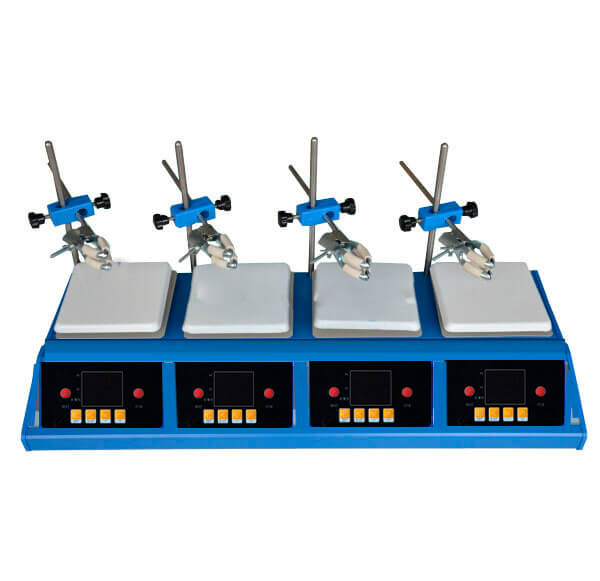
How to Implement Predictive Maintenance and Regular Calibration for Multiposition Intelligent Digital Display Ceramic Hotplate Stirrers?
Multiposition intelligent digital display ceramic hotplate stirrers are essential instruments in many laboratories, particularly in chemistry and biology applications. These devices are favored for their efficiency, quiet operation, and the ability to perform tasks without external moving parts that could wear out over time. However, to ensure optimal performance and longevity, implementing predictive maintenance and regular calibration is crucial. This article will explore the significance of these practices, delve into details of various models available, and provide insights into how laboratory professionals can effectively manage their hotplate stirrers.
Understanding Predictive Maintenance and Calibration
Predictive maintenance involves monitoring the condition of equipment to predict failures before they happen. It reduces unplanned downtime and maintenance costs by allowing laboratories to schedule maintenance based on actual equipment performance rather than a set timetable. Regular calibration, on the other hand, ensures that the equipment operates within specified accuracy limits, which is vital for achieving reliable results in experiments.
Both predictive maintenance and calibration are interconnected practices that enhance the efficiency of multiposition intelligent digital display ceramic hotplate stirrers. Properly maintained equipment is not only crucial for laboratory productivity but also for compliance with relevant standards such as ISO 17025.
Importance of Regular Calibration
Calibration is essential for maintaining the accuracy and reliability of hotplate stirrers. Regular calibration ensures that the temperature readings and stirring speeds are correct, which is critical for experimental accuracy. For instance, models like YR02953 and YR02954 offer a temperature range from ambient to 400°C, and calibration should be performed to ensure this range is accurately reflected in the digital display.
One common practice is to implement a calibration schedule based on usage frequency. For example, high-use stirrers may require calibration every three months, while those used less frequently can be calibrated biannually. Documenting these calibrations is also vital for compliance and quality assurance.
Predictive Maintenance Strategies
To effectively implement predictive maintenance for multiposition hotplate stirrers, laboratories should consider several strategies. First, establish performance monitoring metrics such as Mean Time Between Failures (MTBF) and Mean Time to Repair (MTTR). For example, the YR02955 model offers a stirring speed of up to 1800 RPM, making it essential to track performance metrics closely.
Moreover, using sensors and software to monitor the operational parameters can provide valuable data. For instance, temperature fluctuations and stirring irregularities can be detected early, allowing for timely interventions. This proactive approach reduces the risk of unexpected equipment failures, thereby maintaining laboratory workflow continuity.
Comparison of Available Models
| Model | Temperature Range | Stirring Speed | Positions | Best For |
|---|---|---|---|---|
| YR02953 | Ambient to 400°C | 100-1800 RPM | 4 | Small to medium-scale experiments |
| YR02954 | Ambient to 400°C | 100-1800 RPM | 4 | Medium-scale experiments |
| YR02955 | Ambient to 400°C | 100-1800 RPM | 6 | High-throughput applications |
| YR02947 | Ambient to 400°C | 0-2000 RPM | 2 | Basic stirring tasks |
| YR02948 | Ambient to 400°C | 0-2000 RPM | 2 | Compact applications |
| YR02949 | N/A | N/A | N/A | Economical choice for general use |
Common Mistakes and How to Avoid Them
One common mistake in laboratory settings is neglecting the importance of documenting maintenance and calibration activities. This oversight can lead to compliance issues and operational inefficiencies. Another frequent error is using equipment beyond its specified limits, which can damage the stirrers and compromise results. To avoid these pitfalls, laboratories should maintain a detailed log of all maintenance activities, calibrations, and any anomalies observed during operation.
Furthermore, not training personnel on the proper use and maintenance of hotplate stirrers can contribute to avoidable mistakes. All laboratory staff should receive training on how to calibrate and maintain the equipment to ensure everyone understands the best practices.
Frequently Asked Questions
How often should multiposition intelligent digital display ceramic hotplate stirrers be calibrated?
Calibration frequency for multiposition hotplate stirrers, such as the YR02955 model, should generally be every three to six months, depending on usage. Regular calibration ensures accurate temperature readings and stirring speeds, which is crucial for reliable experimental results.
What is the role of predictive maintenance in laboratory equipment management?
Predictive maintenance plays a key role in managing laboratory equipment like the YR02954 hotplate stirrer by monitoring performance metrics to anticipate failures. This proactive approach minimizes downtime and maintenance costs, ensuring continuous operation in laboratory workflows.
Which calibration standards are applicable to hotplate stirrers?
Hotplate stirrers should comply with calibration standards such as ISO 17025, which outlines requirements for testing and calibration laboratories. Regular calibration of models like YR02953 ensures compliance with these standards, enhancing measurement reliability.
How can I improve the lifespan of my hotplate stirrer?
To improve the lifespan of your hotplate stirrer, implement a regular maintenance schedule that includes calibration, cleaning, and performance monitoring. Utilizing instruments like the YR02948 model with appropriate usage practices can significantly extend operational life.
What are the consequences of neglecting calibration on laboratory results?
Neglecting calibration can lead to inaccurate temperature and stirring speed results, which may compromise experimental data integrity. Regular calibration of hotplate stirrers like the YR02947 is essential to ensure compliance and quality standards in laboratory work.
How does predictive maintenance reduce costs in laboratories?
Predictive maintenance reduces costs by minimizing unplanned downtime and extending equipment life. For instance, monitoring the YR02955 hotplate stirrer's performance can prevent costly repairs and ensure smooth laboratory operations.
If you are looking for a fusion of innovation and quality, you have come to the right place. At Kalstein, we offer you the luxury of exploring our exclusive catalog of laboratory equipment. We manufacture every device to the highest standards of excellence. Our intuitive and seamless online purchasing channels are designed for your convenience, securing the most competitive prices. Hesitate no longer — we bring science to life, it is time to become part of our community.