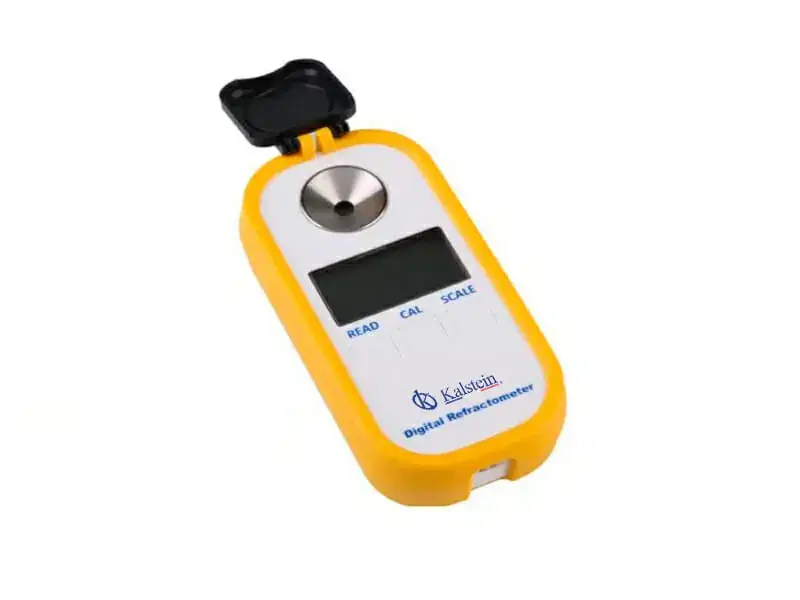
Predictive Maintenance and Recommended Calibration for Digital Salinity Refractometers
Digital salinity refractometers are essential tools in laboratories for precise measurement of salinity in various solutions. As laboratory professionals, understanding predictive maintenance and regular calibration practices is crucial to ensure the longevity and accuracy of these instruments. This article explores various models of digital salinity refractometers, the importance of predictive maintenance, and recommended calibration practices tailored for reliable laboratory operations.
Understanding Predictive Maintenance for Digital Salinity Refractometers
Predictive maintenance involves monitoring equipment conditions to predict failures before they occur, which can significantly enhance the reliability of digital salinity refractometers. By employing predictive maintenance strategies, laboratories can minimize downtime, extend instrument lifespan, and improve measurement accuracy. The key to effective predictive maintenance lies in understanding the operational environment of the refractometers and the specific wear and tear they endure through regular usage.
Implementing predictive maintenance typically involves the following key practices:
- Regularly monitoring critical performance indicators (KPIs) such as temperature stability and calibration drift.
- Using advanced diagnostic tools to detect early signs of equipment deterioration.
- Establishing a routine inspection and maintenance schedule based on usage data.
- Training laboratory personnel on handling and maintaining refractometers to avoid misuse.
Importance of Calibration in Digital Salinity Refractometers
Calibration is a fundamental process in maintaining the accuracy of digital salinity refractometers. Regular calibration ensures that the refractometers provide precise readings, which is essential for applications requiring high accuracy, such as marine biology or food processing. Calibration should ideally be performed with traceable standards to ensure compliance with laboratory practices.
Recommended calibration intervals can vary based on usage frequency, but a general guideline is to calibrate the equipment at the start of each day of use or after significant environmental changes. Each model exhibits distinct calibration protocols, which must be adhered to for optimal performance.
Comparison of Available Models
| Model | Measurement Range | Minimum Division | Accuracy | ATC | Best Use Case |
|---|---|---|---|---|---|
| YR05953 | 0.0--28.0% | 0.10% | ±0.1% | Yes | Brine solutions |
| YR05954 | 0--280‰ | 1‰ | ±1‰ | Yes | Marine water testing |
| YR05955 | 1.000-1.217 | 0.001 | ±0.002 | Yes | Density measurements |
| YR05956 | 1.3330--1.3900nD | 0.0001nD | ±0.0003nD | Yes | Refractive index measurements |
| YR05957 | 0—100‰ | 1‰ | ±2‰ | Yes | Saltwater analysis |
| YR05958 | 0--57‰ | 1‰ | ±2‰ | Yes | Salinity in clinical settings |
Common Mistakes and How to Avoid Them
Laboratory professionals often encounter several common mistakes when utilizing digital salinity refractometers. Understanding these pitfalls can enhance instrument longevity and accuracy:
- Neglecting Calibration: Failing to perform regular calibration can lead to inaccurate readings. Incorporate a strict calibration schedule based on usage.
- Inconsistent Sample Temperature: Measurements taken at varying temperatures can yield inconsistent results. Utilize automatic temperature compensation (ATC) features effectively.
- Improper Sample Handling: Contamination of samples can distort results. Adhere to best practices for sample collection and handling.
- Ignoring Maintenance: Regular maintenance checks are vital. Establish and follow a routine maintenance schedule to prevent unexpected failures.
Frequently Asked Questions
How often should digital salinity refractometers be calibrated for optimal results?
Calibration for digital salinity refractometers like the YR05953 should occur at the beginning of each day of use or after any significant environmental changes to ensure precise readings.
What are the benefits of using predictive maintenance for laboratory refractometers?
Utilizing predictive maintenance strategies can significantly enhance instrument reliability and reduce unexpected breakdowns, leading to cost savings and improved operational efficiency in labs using models like YR05954.
What calibration standards are most relevant for digital salinity refractometers?
Calibration for digital salinity refractometers should be performed using traceable standards that comply with ISO 17025 to ensure accuracy and reliability, particularly for models like YR05956.
How does automatic temperature compensation (ATC) improve measurement accuracy?
Automatic temperature compensation (ATC) enables models like YR05957 to provide accurate salinity readings by automatically correcting for temperature variations, ensuring reliability in varying laboratory environments.
Which model is best suited for marine water testing?
The YR05954 is specifically designed for marine water testing, providing a measurement range of 0-280‰, making it ideal for accurate salinity analysis in oceanographic studies.
What maintenance practices extend the life of digital salinity refractometers?
Implementing routine inspections, adhering to calibration schedules, and training staff on proper use can extend the life of digital salinity refractometers like the YR05958 and maintain their accuracy.
How can I assess the performance of my refractometer over time?
Tracking key performance indicators such as calibration drift and accuracy of measurements over time can help assess the performance of refractometers like YR05955, ensuring they meet laboratory standards.
What should I do if my refractometer shows inconsistent readings?
Inconsistent readings from models like YR05953 may indicate a need for recalibration, a check for sample contamination, or a failure to compensate for temperature variations. Address these issues promptly.
If you are looking for a fusion of innovation and quality, you have come to the right place. At Kalstein, we offer you the luxury of exploring our exclusive catalog of laboratory equipment. We manufacture every device to the highest standards of excellence. Our intuitive and seamless online purchasing channels are designed for your convenience, securing the most competitive prices. Hesitate no longer — we bring science to life, it is time to become part of our community.