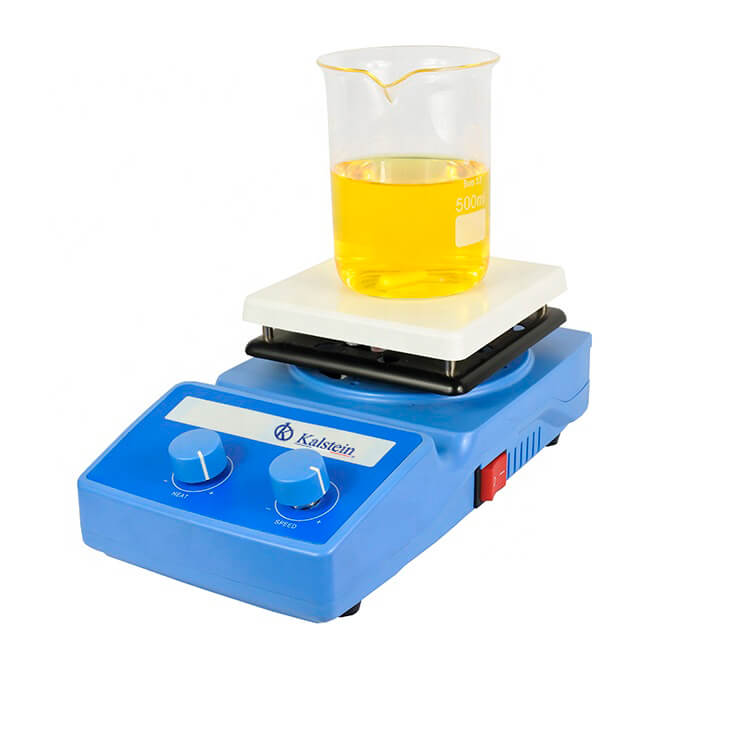
How to Implement Predictive Maintenance and Periodic Calibration for Analog Ceramic Top Hotplate Stirrers
In laboratory settings, maintaining the optimal performance of equipment such as Analog Ceramic Top Hotplate Stirrers is crucial. Predictive maintenance combined with periodic calibration ensures not only the longevity of the equipment but also accuracy in results. This guide will delve into the importance of these practices, the specific models available, and how they can be effectively utilized.
Understanding Predictive Maintenance and Periodic Calibration
Predictive maintenance involves using data and analytics to predict when equipment will fail so that maintenance can be performed just in time to avoid downtime. Periodic calibration, on the other hand, is the process of checking and adjusting equipment against known standards to ensure that it performs accurately. Both practices are essential in laboratory environments that rely on precision and reliability.
Why Predictive Maintenance is Essential for Hotplate Stirrers
Implementing predictive maintenance for Analog Ceramic Top Hotplate Stirrers allows laboratories to manage equipment effectively, reducing unplanned downtime and maintenance costs. By monitoring performance indicators, labs can identify potential issues before they lead to equipment failure, ensuring consistent results in experiments.
Periodic Calibration: Ensuring Accuracy for Laboratory Standards
Calibrating hotplate stirrers periodically is vital to comply with laboratory standards and regulations. Accurate temperature regulation is crucial for experiments that require precise heating and mixing. Regular calibration ensures compliance with international standards such as ISO 17025, which emphasizes the need for reliable measurement results.
Comparison of Available Models
| Model | Temperature Range (°C) | Heating Power (W) | Best For |
|---|---|---|---|
| YR02933 | Ambient to 325 | N/A | Basic heating and stirring tasks |
| YR02934 | Ambient to 380 | N/A | General chemistry and biology applications |
| YR02935 | Room temperature to 380 | 750 | More extensive lab applications with higher capacity |
| YR02936 | Ambient to 400 | 450 | Complex experiments requiring precise temperature control |
Common Mistakes and How to Avoid Them
Laboratories often overlook the importance of tracking maintenance schedules and calibration records. A common mistake is using equipment without ensuring it is properly calibrated, leading to inaccurate results. It is crucial to establish a regular schedule for both predictive maintenance and calibration to prevent such issues.
Key Performance Indicators for Maintenance and Calibration
Tracking key performance indicators (KPIs) such as Mean Time Between Failures (MTBF) and Mean Time To Repair (MTTR) provides valuable insights into the effectiveness of maintenance strategies. Establishing a calibration plan template that outlines frequency, procedures, and responsible personnel is essential for achieving compliance and operational efficiency.
Examples of Predictive Maintenance Strategies
Utilizing technology such as IoT sensors can enhance predictive maintenance strategies for Analog Ceramic Top Hotplate Stirrers. These sensors can monitor temperature stability, stirring speed, and overall equipment performance, alerting lab personnel to any deviations that may indicate the need for maintenance or calibration.
Creating a Calibration Schedule
Developing a calibration schedule based on usage frequency and equipment specifications is vital. For example, high-use equipment like the YR02935, which has a power output of 750W, may require more frequent calibration compared to the YR02933, which is more basic in terms of performance. A well-structured schedule ensures accurate and reliable results.
Frequently Asked Questions
What are the recommended calibration intervals for Analog Ceramic Top Hotplate Stirrers?
Calibration intervals for Analog Ceramic Top Hotplate Stirrers like the YR02934 should typically occur every 6 to 12 months, depending on the usage intensity and laboratory standards. This ensures continued accuracy in temperature control and compliance with guidelines.
How can predictive maintenance reduce costs for laboratory equipment?
Implementing predictive maintenance can significantly reduce costs by preventing unexpected failures of hotplate stirrers such as the YR02936. This approach minimizes downtime and extends the equipment's lifespan, leading to lower overall operational costs.
What are the benefits of using the YR02935 for periodic calibration?
The YR02935, with its advanced PID temperature control, provides reliable performance during periodic calibration, ensuring that laboratory results are accurate and reproducible. This model is ideal for environments where precision is critical.
How does calibration affect compliance with ISO 17025?
Regular calibration of hotplate stirrers, including models like YR02934, is essential for compliance with ISO 17025. This standard emphasizes the accuracy of measurements, and failure to calibrate can lead to non-compliance risks.
What is the impact of temperature accuracy on experimental results?
Temperature accuracy is crucial for experiments conducted using Analog Ceramic Top Hotplate Stirrers. Inaccurate heating can lead to flawed results, making devices like the YR02936 necessary for precise temperature control in sensitive experiments.
How can labs ensure effective predictive maintenance?
To ensure effective predictive maintenance, laboratories should implement monitoring systems for their hotplate stirrers, such as the YR02935, which tracks performance metrics to predict maintenance needs before failures occur.
What are the key features to look for in a hotplate stirrer for predictive maintenance?
Key features for predictive maintenance include real-time monitoring, automatic alerts for performance deviations, and compatibility with maintenance management software. Models like the YR02934 provide essential functionalities for this purpose.
How does the YR02936 contribute to enhanced lab productivity?
The YR02936 enhances lab productivity through its quick heating capabilities and precise temperature control, allowing for efficient processing of samples while maintaining accuracy, which is critical in experimental outcomes.
If you are looking for a fusion of innovation and quality, you have come to the right place. At Kalstein, we offer you the luxury of exploring our exclusive catalog of laboratory equipment. We manufacture every device to the highest standards of excellence. Our intuitive and seamless online purchasing channels are designed for your convenience, securing the most competitive prices. Hesitate no longer — we bring science to life, it is time to become part of our community.