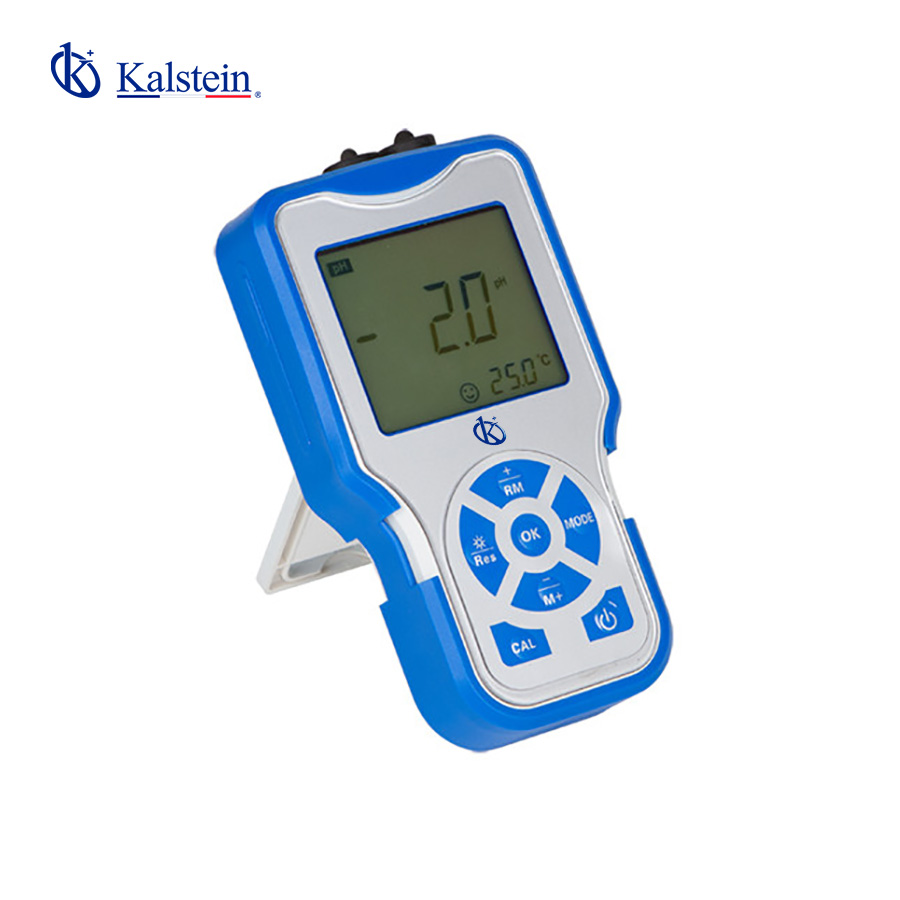
Portable Ion Meters in University Research: Applications and Insights
Portable ion meters play a crucial role in university research projects where precise ion measurement is required. These devices not only facilitate field studies but also enhance the educational experience by allowing students and researchers to conduct experiments in various environments. This article explores the applications of portable ion meters in academic settings, discusses multiple models, and offers insights into their effective use.
Understanding the Role of Portable Ion Meters in University Research
In academic research, especially in the fields of environmental science, chemistry, and biology, the ability to measure ion concentrations accurately and efficiently is paramount. Portable ion meters provide researchers with the flexibility to perform experiments outside the laboratory, enabling real-time data collection and analysis. Their compact design and ease of use make them ideal for both fieldwork and laboratory settings.
Applications of Portable Ion Meters in Academic Research
Portable ion meters are used in various applications including water quality assessment, soil analysis, and chemical education. In water quality studies, they help determine the concentration of specific ions, which is essential for assessing aquatic ecosystems. In soil science, these devices assist in understanding nutrient availability and soil health, supporting agricultural research. Furthermore, portable ion meters are valuable teaching tools, allowing students to engage in hands-on learning and experiment design.
Comparison of Available Models
| Model | Ion Measurement Range | Calibration Points | Best For | Price (USD) |
|---|---|---|---|---|
| YR01816 | -2.000 to 20.000 pH, 0.001 to 19999 | 2 to 5 points | General-purpose ion measurement | 94.00 |
| YR01817-1 | 5 × 10⁻⁶ to 1 M | 2 to 5 points | Ammonium ion measurement | 229.00 |
| YR01817-10 | 5 × 10⁻⁶ to 1 M | 2 to 5 points | Outdoor applications | 500.00 |
| YR01817-11 | 5 × 10⁻⁶ to 1 M | 2 to 5 points | Professional ammonium analysis | 500.00 |
| YR01817-12 | 5 × 10⁻⁶ to 1 M | 2 to 5 points | Field-based research | 500.00 |
| YR01817-13 | 5 × 10⁻⁶ to 1 M | 2 to 5 points | Field and lab applications | 500.00 |
Common Mistakes and How to Avoid Them
One common mistake when using portable ion meters is neglecting calibration. To ensure accuracy, it's essential to calibrate the devices according to the manufacturer's specifications before performing measurements. Additionally, researchers should avoid using the meters in unsuitable environmental conditions, as this can affect performance. Regular maintenance and proper storage also play a critical role in ensuring reliable results.
Enhancing Research with Portable Ion Meters
Portable ion meters enhance the research capabilities of universities by providing flexibility and real-time data collection. Their ability to measure various ions makes them suitable for diverse applications, from analyzing water quality to conducting soil health assessments. The compact design facilitates easy transportation, allowing researchers to conduct experiments in remote locations without compromising accuracy.
Data Collection and Analysis Techniques
Effective data collection and analysis are essential in research involving portable ion meters. Researchers should establish a clear protocol for sampling and measurement to ensure consistency. Utilizing software for data analysis can enhance the understanding of results, allowing for better interpretation and presentation of findings. Additionally, it is crucial to document conditions during measurements for future reference.
Choosing the Right Portable Ion Meter for Research Needs
When selecting a portable ion meter, researchers must consider factors such as measurement range, calibration options, and specific ion capabilities. For instance, the YR01817-1 model is specifically designed for ammonium ions, making it an excellent choice for ammonia-related studies. Conversely, the YR01816 model is more versatile and suitable for general ion measurements, making it ideal for diverse research applications.
Frequently Asked Questions
What features to consider when selecting a portable ion meter for academic research?
When selecting a portable ion meter for academic research, consider features like measurement range, calibration points, and specific ion capabilities. For example, the YR01817-1 model, offering a range of 5 × 10⁻⁶ to 1 M, is ideal for ammonium ion measurement, which is crucial for various environmental studies.
How can portable ion meters be utilized in environmental studies?
Portable ion meters are widely used in environmental studies to assess water quality by measuring ion concentrations in real-time. They enable researchers to conduct field studies and gather data efficiently, which is essential for understanding the health of aquatic ecosystems.
Which portable ion meter is best for field research on ammonium ions?
The YR01817-1 model is best for field research on ammonium ions, as it is designed for outdoor applications and has a precision of 0.5% F.S. Its calibration options and display features make it suitable for various field conditions.
What is the significance of calibration in portable ion meters?
Calibration is essential for ensuring the accuracy of portable ion meters. Regularly calibrating devices like the YR01816 before measurements allows researchers to obtain reliable results, minimizing the risk of errors in data collection.
How do portable ion meters contribute to educational experiences in laboratories?
Portable ion meters enhance educational experiences by providing hands-on learning opportunities for students. These devices allow students to engage in real-world experiments, facilitating a deeper understanding of ion measurements and their implications in various scientific fields.
What maintenance practices are recommended for portable ion meters?
Regular maintenance practices for portable ion meters include routine calibration, cleaning, and proper storage. Keeping the device’s electrode in good condition is vital, as seen with models like the YR01817-10, to ensure long-lasting performance and accurate readings.
How to analyze data collected from portable ion meters effectively?
To analyze data collected from portable ion meters effectively, researchers should utilize data analysis software for better visualization and interpretation. Documenting conditions during measurements is also important for correlating results with environmental factors.
What are the cost implications of using portable ion meters in research settings?
Cost implications of using portable ion meters include initial investments in the equipment, such as the YR01816 priced at $94.00, and ongoing expenses for calibration solutions and maintenance. These factors should be considered in budgeting for research projects.
If you are looking for a fusion of innovation and quality, you have come to the right place. At Kalstein, we offer you the luxury of exploring our exclusive catalog of laboratory equipment. We manufacture every device to the highest standards of excellence. Our intuitive and seamless online purchasing channels are designed for your convenience, securing the most competitive prices. Hesitate no longer — we bring science to life, it is time to become part of our community.