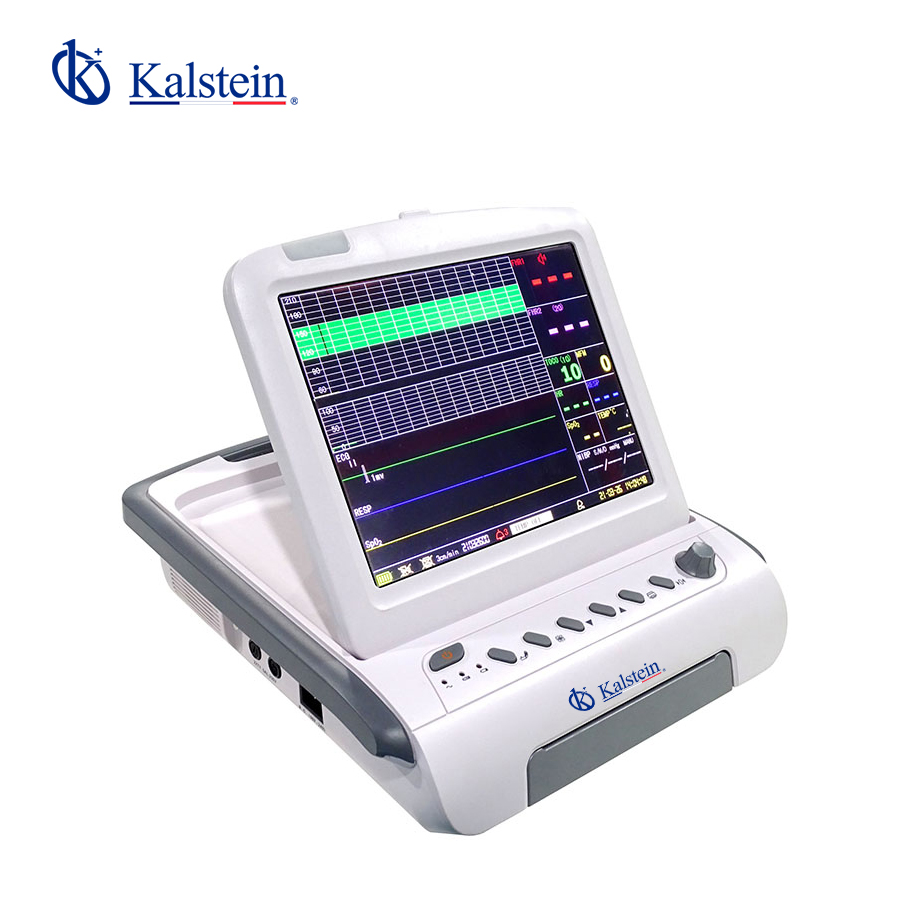
Understanding the Operating Principle and Scientific Foundation of the YR02181 Fetal Doppler Ultrasound Monitor
The YR02181 Fetal Doppler Ultrasound Monitor is an advanced medical device designed for the assessment of fetal health. This article delves into its operating principles, scientific foundation, and practical applications in clinical settings.
Operating Principle of YR02181
The YR02181 utilizes Doppler ultrasound technology to measure fetal heart rate (FHR) and uterine contractions (TOCO). The underlying principle is the Doppler effect, which involves the change in frequency of sound waves reflected off moving objects—in this case, the fetal heart.
As sound waves emitted by the device encounter the fetal heart, they bounce back at altered frequencies due to the heart's motion. This frequency shift is used to calculate the heart rate through complex algorithms integrated into the device. The YR02181 is capable of displaying FHR waveforms, allowing healthcare professionals to monitor fetal well-being in real time.
Technical Specifications of YR02181
| Model | YR02181 |
|---|---|
| Display | 12.1-inch Color TFT, 90-degree tilt |
| Resolution | 800 x 600 |
| Waveform Tracing | Up to 6 waveforms |
| Standard Configuration | FHR1, TOCO, FM, Recorder |
| Optional Configuration | Fetal Stimulator, FHR2, Cart |
Scientific Foundations of Doppler Ultrasound
Doppler ultrasound works on the principles of wave mechanics and physics. The device emits sound waves that travel through the body, reflecting off moving structures such as the fetal heart. The frequency shift is calculated using the formula:
f' = f (v + v0) / (v - vs)
Where:
- f' is the observed frequency
- f is the source frequency
- v is the speed of sound in the medium
- v0 is the speed of the observer (in this case, the fetal heart)
- vs is the speed of the source (the ultrasound probe)
This formula is essential for interpreting the data acquired by the YR02181, allowing healthcare providers to accurately assess fetal health.
Common Applications in Clinical Settings
The YR02181 Fetal Doppler is commonly utilized in prenatal clinics, labor and delivery units, and obstetric departments. Its primary applications include:
- Monitoring fetal heart rate during prenatal visits
- Assessing fetal well-being during labor
- Detecting fetal distress and deciding on interventions
Healthcare professionals rely on this monitor for real-time data, which is crucial for making informed decisions during pregnancy and delivery.
Advantages of Using the YR02181
One of the key advantages of the YR02181 is its portability and ease of use. Healthcare providers can quickly deploy the device in various settings, allowing for flexible monitoring solutions. The high-resolution display ensures that the vital information is easily accessible and interpretable.
Additionally, the ability to record and playback data is invaluable for reviewing previous measurements and making better-informed decisions regarding patient care.
Frequently Asked Questions
What is the frequency range of the YR02181 Fetal Doppler?
The YR02181 Fetal Doppler uses ultrasonic frequencies typically around 2-3 MHz, which are ideal for detecting fetal heartbeats.
How can I interpret the readings from the YR02181?
The monitor displays FHR waveforms, which should be interpreted based on established fetal heart rate patterns. Normal ranges usually fall between 120-160 bpm, but variations may indicate different fetal conditions.
What is the significance of TOCO measurements in fetal monitoring?
TOCO measurements indicate uterine contractions, which are crucial for assessing labor progress and fetal response during labor.
How does the YR02181 ensure accurate readings?
The device employs advanced algorithms that filter out noise and enhance the quality of the signal, ensuring that readings are both accurate and reliable.
What optional features can be added to enhance the use of YR02181?
Optional features include a fetal stimulator, additional heart rate monitoring capabilities, and mobility carts for easy transport.
What are the maintenance requirements for the YR02181?
Regular maintenance should include calibration checks, battery assessments, and cleaning of the transducer to ensure optimal performance.
Can the YR02181 be used in home settings?
While primarily designed for clinical environments, the YR02181 can be adapted for home monitoring with appropriate training and safety measures.
If you are looking for a fusion of innovation and quality, you have come to the right place. At Kalstein, we offer you the luxury of exploring our exclusive catalog of laboratory equipment. We manufacture every device to the highest standards of excellence. Our intuitive and seamless online purchasing channels are designed for your convenience, securing the most competitive prices. Hesitate no longer — we bring science to life, it is time to become part of our community.