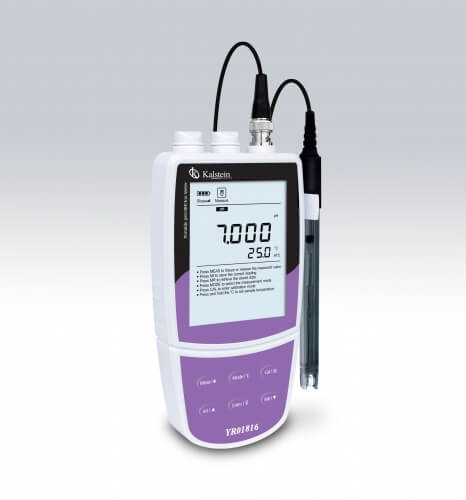
Understanding the Operating Principle and Scientific Foundation of the YR01817-14 Portable Ammonium Ion Meter
The YR01817-14 Portable Ammonium Ion Meter is a professional-grade device designed for accurate measurement of ammonium ion concentrations in various environments. This article delves into the scientific principles governing its operation, allowing users to maximize its capabilities and ensure precise results.
Operating Principle of the YR01817-14
The YR01817-14 operates on the principle of ion-selective electrodes (ISEs), which are designed to respond selectively to specific ions in solution. In this case, the meter is tailored for measuring ammonium ions (NH4+), providing precision in environments requiring rigorous ion analysis.
The electrode used in the YR01817-14 contains a membrane that selectively allows ammonium ions to pass through, creating a potential difference that is measured by the meter. The Nernst equation is central to understanding this interaction, as it relates the measured potential to the concentration of the ammonium ions present:
E = E0 + (RT/nF) * ln([An+])
Where:
- E = measured potential
- E0 = standard electrode potential
- R = universal gas constant
- T = absolute temperature (in Kelvin)
- n = charge number of the ion (for ammonium, n=1)
- F = Faraday's constant
- [An+] = activity of the ammonium ion
This principle showcases the scientific foundation that allows the YR01817-14 to provide accurate readings across a range of concentrations.
Key Features of the YR01817-14
| Feature | Description |
|---|---|
| LCD Display | Backlit LCD for easy readability in various lighting conditions. |
| Calibration Points | Supports 2 to 5 calibration points, ensuring measurement accuracy across a range of concentrations. |
| Temperature Compensation | Automatic temperature compensation for accurate readings at varying temperatures. |
| Data Storage | Can store up to 500 data sets for later analysis. |
| USB Interface | Allows for data transfer and connection to a power adapter. |
Scientific Fundamentals Behind Measurement Accuracy
The accuracy of the YR01817-14 is influenced by multiple factors, including electrode quality, calibration procedures, and environmental conditions. The meter boasts an accuracy of ±0.5% FS, which is crucial for applications in clinical, environmental, and research settings.
Calibration is a central operation that ensures the meter functions correctly. Users can select calibration solutions ranging from 0.001 to 10,000 ppm. Regular calibration is recommended to account for electrode drift and age, as indicated by the built-in calibration alarm.
Calibration Process for the YR01817-14
To achieve the best results with the YR01817-14, following a precise calibration process is essential. The calibration process typically involves:
- Prepare calibration solutions that fall within the expected measurement range.
- Access the calibration menu on the device.
- Select the number of calibration points (2-5) based on your needs.
- Immerse the electrode in the first calibration solution and wait for the reading to stabilize.
- Record the value and repeat the process for additional solutions.
- Confirm calibration and save settings before proceeding to measurement.
Implementing these steps diligently will enhance the reliability of your results.
Applications of the YR01817-14 Across Sectors
The versatility of the YR01817-14 makes it suitable for various fields including:
- Clinical Laboratories: Used for analyzing biological samples to monitor ammonium levels in patients.
- Environmental Testing: Essential in testing water quality in rivers and lakes to ensure it meets safety standards.
- Food Industry: Monitors ammonium concentrations in food processing to ensure compliance with health regulations.
- Educational Institutions: Used in laboratories for teaching analytical chemistry principles.
Each application highlights the importance of accurate ammonium measurement, showcasing the YR01817-14's scalability.
Maintenance and Troubleshooting of the YR01817-14
To maintain the YR01817-14's performance, regular cleaning and checks are necessary. Common maintenance tasks include:
- Cleaning the electrode with distilled water after measurements.
- Regularly checking battery levels to ensure optimal performance.
- Storing the device in a protective case to avoid damage.
In the event of issues, refer to the troubleshooting table below:
| Symptom | Possible Causes | Solutions |
|---|---|---|
| Device does not power on | Dead batteries or poor connections | Replace batteries or check connections |
| Error code E-03 | Calibration error | Recalibrate the device |
| Inconsistent readings | Dirty electrode or calibration needed | Clean electrode and recalibrate |
Frequently Asked Questions
What is the sensitivity range of the YR01817-14?
The YR01817-14 can measure ammonium ion concentrations from 5 × 10⁻⁶ M to 1 M, equivalent to 0.1 to 18,000 ppm, making it suitable for a wide range of applications.
How often should I calibrate the YR01817-14?
It is recommended to calibrate the YR01817-14 regularly, especially before critical measurements or at least every 30 days to ensure accuracy.
What should I do if the electrode is damaged?
If the electrode is damaged, it is advisable to replace it with a compatible electrode for the YR01817-14 to maintain measurement accuracy.
Can I use the YR01817-14 in different environmental conditions?
Yes, the YR01817-14 is designed to operate within a temperature range of 0 to 105 °C (32 to 221 °F) and can handle various humidity levels, but it should be protected from extreme conditions.
What types of solutions can I use for calibration?
You can use calibration solutions ranging from 0.001 to 10,000 ppm for the YR01817-14, which are critical for ensuring precise measurements.
How can I store data measured with the YR01817-14?
The device can store up to 500 sets of data, which can be transferred via its USB interface for analysis.
What is the battery life of the YR01817-14?
With the backlight turned off, the YR01817-14 has an approximate battery life of 150 hours, making it efficient for prolonged use.
If you are looking for a fusion of innovation and quality, you have come to the right place. At Kalstein, we offer you the luxury of exploring our exclusive catalog of laboratory equipment. We manufacture every device to the highest standards of excellence. Our intuitive and seamless online purchasing channels are designed for your convenience, securing the most competitive prices. Hesitate no longer — we bring science to life, it is time to become part of our community.