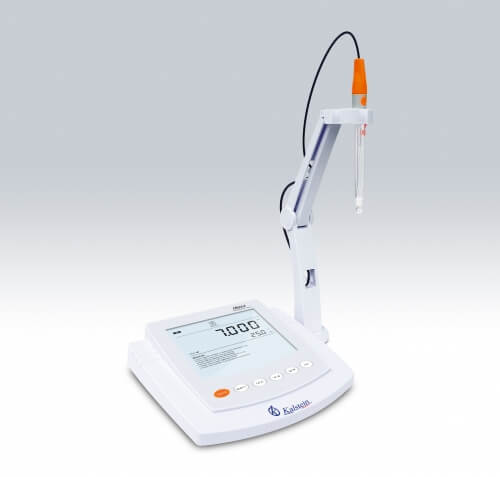
Maximizing ROI with Table Conductivity Controllers: A Comprehensive Guide
In the current laboratory environment, the selection of equipment plays a crucial role in the operational efficiency and financial health of an organization. This article delves into the return on investment (ROI) and cost-benefit analysis of table conductivity controllers, exploring various models and their applications in the lab setting. Understanding these dynamics will help laboratory professionals make informed decisions that align with their strategic goals.
Understanding the ROI for Table Conductivity Controllers
The ROI for laboratory equipment, such as table conductivity controllers, is determined by evaluating the costs associated with their acquisition and operation against the benefits they deliver. Key factors influencing ROI include initial costs, operational expenses, throughput, and productivity gains. Table conductivity controllers, such as the YR01836-1 and YR01836, offer multiparameter capabilities, making them valuable assets for labs involved in quality control and research, which can enhance overall profitability.
Key Factors Affecting the Cost-Benefit Analysis
When assessing the cost-benefit of table conductivity controllers, consider the following factors:
- Initial Investment: The purchase price of the device, which can vary widely among models.
- Operational Costs: This includes consumables, maintenance, and calibration expenses.
- Throughput Capacity: The number of samples processed in a given timeframe affects overall operational efficiency.
- Durability and Reliability: Higher quality equipment tends to have a longer lifespan, reducing replacement costs.
Comparison of Available Models
| Model | Initial Cost (USD) | Calibration Points | Best For |
|---|---|---|---|
| YR01836-1 | 355.00 | 1 to 5 | Versatile lab testing |
| YR01836 | 199.00 | 1 to 3 | Basic conductivity measurement |
| YR01829-1 | 160.00 | 1 to 3 | Daily testing and control |
| YR01829-2 | 235.00 | 1 to 3 | Routine monitoring |
| YR01829 | 285.00 | 1 to 3 | Advanced analytical labs |
| YR01828 | 232.00 | 1 to 3 | TDS and salinity measurements |
Quantitative Breakdown of Costs and Benefits
Conducting a quantitative analysis helps lab managers understand the potential benefits of investing in table conductivity controllers. For example, the YR01836-1, priced at $355, could be used for advanced applications that yield a high throughput, thereby minimizing the cost per test over time. Conversely, the YR01836 model at $199 may be ideal for labs with lower throughput needs, helping them to balance costs effectively.
Identifying Common Mistakes in ROI Calculation
When calculating ROI, common mistakes include:
- Neglecting indirect costs associated with equipment failure or maintenance.
- Forgetting to factor in lost revenue from downtime during calibration or repairs.
- Overestimating the lifespan of the equipment without considering technological advancements.
Strategies to Optimize the Cost-Benefit Ratio
To enhance the cost-benefit ratio of table conductivity controllers, laboratories can implement strategies like:
- Regular maintenance and calibration to prolong equipment lifespan.
- Investing in training for staff to maximize the use of advanced features.
- Utilizing data analysis to identify trends and improve operational efficiency.
Frequently Asked Questions
What is the average ROI for table conductivity controllers in a lab setting?
The average ROI can vary greatly depending on model selection and usage. For instance, the YR01836-1 offers extensive features at $355, potentially leading to higher efficiency and cost savings over time. Labs may see an ROI period ranging from 6 to 12 months when used effectively.
How can I determine the best model of table conductivity controllers for my specific needs?
Evaluating factors such as initial cost, calibration options, and specific testing needs is crucial. For high versatility, models like the YR01836-1 are recommended, while simpler tasks may suffice with models like the YR01836.
Are there financing options available for purchasing table conductivity controllers?
Many suppliers, including Kalstein, offer financing options for laboratory equipment, including table conductivity controllers. This can help mitigate upfront costs and improve cash flow for labs as they invest in necessary equipment.
How do I perform a cost-benefit analysis on a table conductivity controller?
To conduct a cost-benefit analysis, gather data on initial purchase costs, operational expenses, and throughput. For example, with the YR01829 model priced at $160, you can compare these metrics against expected outputs to evaluate profitability.
What are the maintenance costs associated with table conductivity controllers?
Maintenance costs will vary by model and usage frequency. Regular calibration and servicing are essential. For instance, the YR01836-1 may require more frequent maintenance due to its advanced features compared to simpler models like the YR01829.
How do calibration points impact the functionality of table conductivity controllers?
Calibration points directly affect measurement accuracy and reliability, with models like the YR01836-1 supporting up to 5 points for precise adjustments. This flexibility is crucial in settings with varying sample types and conditions.
What is the typical lifespan of table conductivity controllers?
The lifespan of table conductivity controllers can vary from 5 to 10 years, depending on usage, maintenance, and technology advancements. Choosing high-quality models like the YR01836 can ensure better longevity.
If you are looking for a fusion of innovation and quality, you have come to the right place. At Kalstein, we offer you the luxury of exploring our exclusive catalog of laboratory equipment. We manufacture every device to the highest standards of excellence. Our intuitive and seamless online purchasing channels are designed for your convenience, securing the most competitive prices. Hesitate no longer — we bring science to life, it is time to become part of our community.