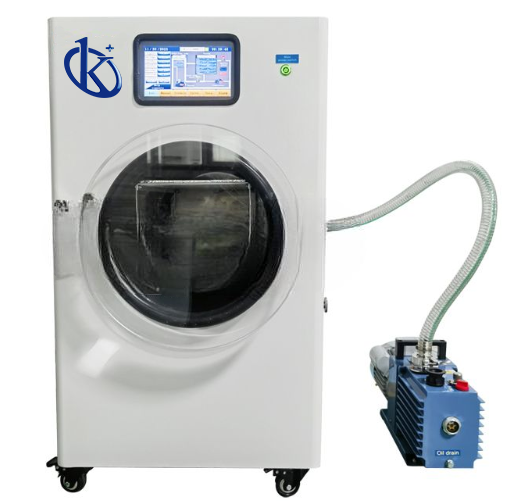
Maximizing ROI in Food Freeze Drying Technologies
Food freeze drying is a technological advancement that enables the preservation of food products while retaining their essential nutrients and flavor. However, laboratories and businesses often grapple with understanding the return on investment (ROI) and the cost-benefit analysis associated with these technologies. This article delves into various models of food freeze dryers, comparing their features, operational costs, and overall efficiency to help make informed decisions.
Understanding the ROI in Food Freeze Drying
Return on investment (ROI) in food freeze drying is essentially a measure of the profitability of deploying these machines. Factors to consider include initial capital expenditure (CAPEX), operational costs (OPEX), output value, and the duration required to recoup the investments. Understanding these elements is key to maximizing profit margins.
Comparison of Available Models
| Model | CAPEX (USD) | Production Capacity (kg) | Energy Consumption (W) | Best for |
|---|---|---|---|---|
| YR05984 | 2285.00 | 4-6 | 1550 | Small batch production |
| YR05983 | 2215.00 | 1-2 | 1100 | Home use |
| YR05985 | 3000.00 | 6-8 | 2000 | Fruits and vegetables |
| YR06612 | 171200.00 | 500 | 150000 | Industrial scale |
Cost-Benefit Analysis of Food Freeze Dryers
Conducting a cost-benefit analysis helps laboratories assess the advantages of food freeze dryers against their costs. The analysis considers the initial purchase price, maintenance costs, and expected lifespan of the machines. For instance, the YR06612 provides higher capacity (500 kg) suitable for industrial applications, potentially yielding better long-term returns compared to smaller models, although its initial cost is significantly higher.
Factors Affecting ROI in Food Freeze Drying
Several factors influence ROI in food freeze drying, including the scale of production, energy efficiency, and shelf-life of the products. An energy-efficient model like the YR05985, with a temperature control range of -25°C to +60°C, can lead to reduced operational costs and increased profitability over time.
Common Mistakes and How to Avoid Them
One of the biggest mistakes in food freeze drying is underestimating ongoing operational costs. It's vital to analyze energy consumption as seen in the models listed above. Additionally, selecting a model that fits the production requirements is critical. For example, the YR05983 is ideal for home use but may not meet the demands of a commercial operation.
Frequently Asked Questions
How can I determine the ROI of a food freeze dryer model over five years?
The ROI of a food freeze dryer can be determined by calculating total earnings from product sales minus the combined CAPEX and OPEX over five years. For instance, the YR05984 model, with a CAPEX of $2285.00 and operational costs can be evaluated against expected revenue based on production capacity.
What are the key operational costs associated with food freeze dryers?
Key operational costs include energy consumption, maintenance, and labor. For instance, the YR06612 model consumes significantly more energy (150,000 W), hence operational costs will be higher compared to smaller models like YR05983, which consumes only 1100 W.
Which food freeze dryer model offers the best energy efficiency?
The YR05985 model offers excellent energy efficiency with controllable temperature settings, allowing users to optimize energy consumption based on specific drying needs, making it an ideal choice for fruits and vegetables.
How does production capacity affect the cost-benefit analysis of food freeze dryers?
Production capacity directly impacts the ROI, as higher capacity models like the YR06612 can process larger batches, yielding more finished product and revenue, which justifies the higher initial investment compared to smaller models.
What maintenance costs should I expect for food freeze drying equipment?
Maintenance costs typically include regular servicing, parts replacement, and energy costs. Consistent maintenance for models like YR05984 can prevent costly repairs and extend the lifespan of the equipment.
How do I choose the right food freeze dryer for my laboratory needs?
Choosing the right food freeze dryer involves evaluating production needs, space constraints, and budget. For small-scale operations, the YR05983 model is efficient, while larger operations may benefit more from the YR06612 for its higher output.
Can I expect a quick payback period from my investment in food freeze dryers?
A quick payback period can be expected if the selected model, such as YR05984, aligns with market demand and operational efficiency, ensuring that revenue generated covers the initial investment promptly.
Conclusion
In conclusion, maximizing ROI in food freeze drying requires a comprehensive understanding of the costs and benefits associated with each model. By analyzing factors such as operational costs and production capacity, laboratories can make informed choices that align with their financial goals. If you are looking for a fusion of innovation and quality, you have come to the right place. At Kalstein, we offer you the luxury of exploring our exclusive catalog of laboratory equipment. We manufacture every device to the highest standards of excellence. Our intuitive and seamless online purchasing channels are designed for your convenience, securing the most competitive prices. Hesitate no longer — we bring science to life, it is time to become part of our community.