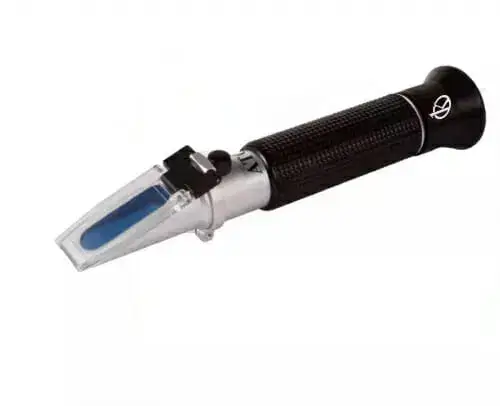
Maximizing ROI and Cost-Benefit Analysis for Brix Refractometers in Laboratories
In the competitive landscape of laboratory operations, understanding the return on investment (ROI) for equipment is crucial. Brix refractometers are essential tools used widely in various fields, including viticulture, food production, and brewing, for measuring the sugar content in solutions. This article delves into how these devices can maximize ROI and the cost-benefit analysis relevant to laboratory environments.
Understanding Brix Refractometers and Their Financial Impact
Brix refractometers, such as the models YR05872, YR05873, YR05874, YR05875, YR05876, and YR05877, are designed to measure the Brix level, which indicates the sugar concentration in solutions. This measurement is vital for various applications, making these refractometers indispensable in laboratories. Their ability to provide quick and reliable results contributes to decreased labor costs and improved productivity, ultimately impacting the financial performance of a laboratory.
Key Financial Metrics Related to Brix Refractometers
To evaluate ROI effectively, laboratory managers should consider several key metrics, including initial capital expenditure (CAPEX), operating expenses (OPEX), and the payback period. By analyzing these metrics, laboratories can make informed decisions regarding the procurement and utilization of Brix refractometers.
Comparison of Available Models
| Model | Measurement Range | Minimum Division | Accuracy | Average Price (USD) |
|---|---|---|---|---|
| YR05872 | 0-5% Brix | 0.1 Brix | ± 0.10 Brix | 10.00 |
| YR05873 | 0-10% Brix | 0.1 Brix | ± 0.10 Brix | 10.00 |
| YR05874 | 0-18% Brix | 0.1 Brix | ± 0.10 Brix | 10.00 |
| YR05875 | 0-20% Brix | 0.1 Brix | ± 0.10 Brix | 9.50 |
| YR05876 | 0-32% Brix | 0.1 Brix | ± 0.10 Brix | 9.50 |
| YR05877 | 0-15% Brix | 0.1 Brix | ± 0.10 Brix | 10.00 |
Calculating ROI for Brix Refractometers
Calculating ROI involves comparing the expected benefits against the costs incurred when purchasing and maintaining the refractometers. The formula for ROI is:
ROI = (Net Profit / Cost of Investment) x 100
For instance, if a laboratory invests $1,000 in a Brix refractometer, and it saves $1,200 annually through increased efficiency and reduced labor costs, the ROI would be:
Net Profit = $1,200 - $1,000 = $200
ROI = ($200 / $1,000) x 100 = 20%
Cost-Benefit Analysis of Brix Refractometers
A comprehensive cost-benefit analysis involves evaluating direct costs, labor savings, and potential impacts on product quality. The direct costs include the purchase price, maintenance, and calibration expenses. Labor savings result from automated measurements and reduced testing time, which can enhance overall laboratory efficiency.
| Cost Element | Estimated Annual Cost (USD) |
|---|---|
| Purchase Price | 1,000 |
| Calibration and Maintenance | 200 |
| Labor Savings | 1,200 |
| Total Annual Cost | 1,400 |
Through this analysis, laboratory managers can determine if the benefits outweigh the costs, leading to informed purchasing decisions.
Common Mistakes and How to Avoid Them
It is common for laboratories to underestimate the importance of proper training and calibration for Brix refractometers. Failing to provide adequate training can lead to inaccuracies in measurements, resulting in poor product quality. Moreover, neglecting regular calibration can cause deviations in readings, impacting the reliability of data. To avoid these pitfalls, invest in training sessions and establish a calibration schedule.
Frequently Asked Questions
What factors should I consider when selecting a Brix refractometer for my laboratory?
When selecting a Brix refractometer, consider the measurement range, accuracy, and intended application. For instance, the YR05873 model is ideal for up to 10% Brix, making it suitable for testing various fruit juices, while the YR05876 model, which measures up to 32% Brix, is better for syrup testing.
How can a Brix refractometer improve the efficiency of my laboratory?
A Brix refractometer can enhance laboratory efficiency by providing quick and accurate measurements, reducing the time required for testing. For example, laboratories using the YR05874 model can swiftly assess sugar levels in liquids, allowing for faster analysis and decision-making.
How often should I calibrate my Brix refractometer to ensure accuracy?
It is recommended to calibrate your Brix refractometer monthly or before critical measurements. Regular calibration ensures accuracy and reliability of readings, which is crucial for models like the YR05875 that require precise measurements for quality control in food production.
What is the average lifespan of a Brix refractometer in a laboratory setting?
The average lifespan of a Brix refractometer ranges from 3 to 5 years, depending on usage and maintenance protocols. Models like the YR05876 require proper care and calibration to extend their service life and maintain measurement precision over time.
How does the cost of a Brix refractometer compare to potential savings in labor?
The cost of a Brix refractometer, such as the YR05872, typically ranges from $9.50 to $10.00, which is minimal compared to potential labor savings. Laboratories can save significantly on labor costs through automation of measurements, making the investment worthwhile.
What return on investment can I expect from using Brix refractometers in my lab?
Return on investment for Brix refractometers can vary, but many labs report a 20% ROI within the first year due to increased efficiency and reduced waste. For instance, a laboratory implementing the YR05874 model can see substantial cost reductions in labor and materials.
What features should I look for in a Brix refractometer for food testing?
For food testing, look for features such as a wide measurement range, high accuracy, and automatic temperature compensation (ATC). The YR05875 model, for example, is equipped with ATC, ensuring precise readings across varying temperatures, which is essential in food applications.
How do Brix refractometers contribute to quality control in laboratories?
Brix refractometers are crucial in quality control as they provide quick and accurate measurements of sugar levels, affecting the taste and quality of products. Models like YR05876 help ensure consistent quality by allowing for real-time monitoring of sugar concentrations in production processes.
If you are looking for a fusion of innovation and quality, you have come to the right place. At Kalstein, we offer you the luxury of exploring our exclusive catalog of laboratory equipment. We manufacture every device to the highest standards of excellence. Our intuitive and seamless online purchasing channels are designed for your convenience, securing the most competitive prices. Hesitate no longer — we bring science to life, it is time to become part of our community.