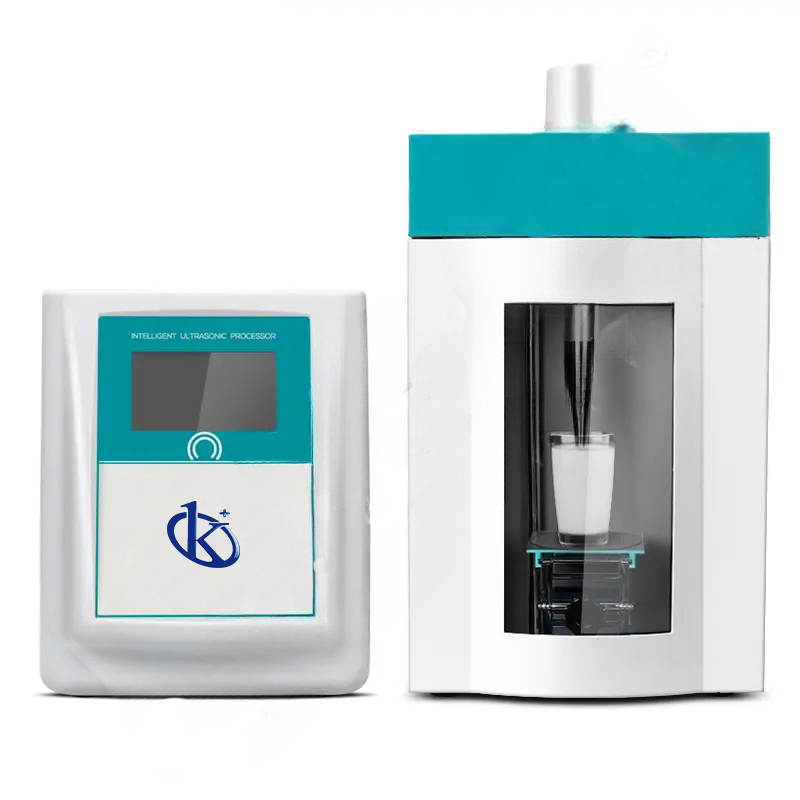
Maximizing ROI and Conducting Cost-Benefit Analysis for Ultrasonic Homogenizers
In the realm of laboratory technologies, ultrasonic homogenizers play a crucial role in sample preparation and emulsification. However, when considering the purchase of such equipment, laboratory managers must conduct a thorough ROI and cost-benefit analysis to ensure that their investment yields optimal returns. This article delves into the financial justifications for investing in ultrasonic homogenizers, addresses common pitfalls, and provides a comparative overview of several available models, all while emphasizing specific performance metrics and laboratory applications.
Understanding Cost-Benefit Analysis for Ultrasonic Homogenizers
Cost-benefit analysis (CBA) is a systematic approach used to evaluate the financial implications of purchasing laboratory equipment, such as ultrasonic homogenizers. It involves comparing the total expected costs of acquisition and operation against the anticipated benefits, which may include improved throughput, enhanced sample quality, and reduced reagent consumption. The goal is to determine whether an investment aligns with the laboratory's financial strategy and operational goals.
Investment Metrics: CAPEX vs OPEX
When evaluating ultrasonic homogenizers, it is vital to differentiate between capital expenditures (CAPEX) and operational expenditures (OPEX). CAPEX includes the initial purchase price of the ultrasonic homogenizer, such as the Ultrasonic Homogenizer YR05015 priced at $756.00, while OPEX encompasses ongoing costs like maintenance, energy usage, and consumables.
Table: CAPEX and OPEX Analysis of Selected Models
| Model | CAPEX (USD) | Annual OPEX (USD) |
|---|---|---|
| YR05015 | 756.00 | 120.00 |
| YR05016 | 882.00 | 130.00 |
| YR05017 | 1050.00 | 150.00 |
| YR05018 | 1281.00 | 170.00 |
| YR05019 | 1785.00 | 220.00 |
| YR05020 | 2058.00 | 250.00 |
Calculating Payback Period
The payback period is a key metric in financial analysis, indicating how long it will take for an investment to repay its initial cost through generated savings or profits. For ultrasonic homogenizers, factors such as increased throughput and reduced reagent usage contribute to faster recovery of the initial investment.
Comparison of Available Models
When selecting an ultrasonic homogenizer, it is essential to consider specific metrics that influence ROI. Below is a comparative table outlining various models and their characteristics relevant to ROI considerations.
Table: Ultrasonic Homogenizer Comparison
| Model | Mixing Capacity (ml) | Power (W) | Cost per Test (USD) | Best For |
|---|---|---|---|---|
| YR05015 | 150 | 150 | 5.00 | Small labs |
| YR05016 | 300 | 250 | 6.00 | Medium labs |
| YR05017 | 500 | 650 | 7.50 | Research labs |
| YR05018 | 600 | 900 | 9.00 | High-throughput labs |
| YR05019 | 1000 | 1200 | 11.00 | Industrial applications |
| YR05020 | 1200 | 1800 | 13.00 | High-capacity labs |
Common Mistakes and How to Avoid Them
Laboratories often make errors in their purchasing decisions regarding ultrasonic homogenizers, primarily due to inadequate analysis of their needs and budget constraints. Common mistakes include selecting a model with insufficient capacity or failing to consider the total cost of ownership, including maintenance, energy consumption, and consumables.
Frequently Asked Questions
What are the ROI benefits of using ultrasonic homogenizers in my lab?
The ROI benefits of ultrasonic homogenizers, such as the YR05018, include enhanced sample processing efficiency and reduced reagent waste, resulting in a quicker payback period for investments.
How do I calculate the total cost of ownership for ultrasonic homogenizers?
Total cost of ownership for ultrasonic homogenizers involves assessing both CAPEX and OPEX, including maintenance and energy costs. For instance, the YR05019 has a CAPEX of $1785.00 and an estimated OPEX of $220.00 annually.
Which ultrasonic homogenizer model offers the best performance for small labs?
The YR05015 model, with a mixing capacity of 150 ml and a power output of 150W, is ideal for small labs looking to optimize their ROI while maintaining operational efficiency.
What factors influence the operational costs of ultrasonic homogenizers?
Operational costs are influenced by factors such as energy consumption, maintenance requirements, and the cost of consumables. For example, the YR05016 has an annual OPEX of $130.00.
How can I improve the cost-efficiency of my ultrasonic homogenizer?
Improving cost-efficiency can be achieved by selecting a model with suitable mixing capacity for your specific applications. The YR05018, with a capacity of 600 ml, provides an efficient balance between cost and performance for adequate throughput.
What is the average payback period for ultrasonic homogenizer investments?
The average payback period for ultrasonic homogenizer investments typically ranges from 12 to 24 months, depending on the model and the specific application efficiency, as seen with models like YR05017.
What are the energy consumption metrics for ultrasonic homogenizers?
Energy consumption metrics can vary significantly among models. For instance, the YR05020 can operate at a maximum power of 1800W, which should be factored into the total operational cost analysis.
How do I select the right ultrasonic homogenizer for my laboratory needs?
Selecting the right ultrasonic homogenizer involves assessing your laboratory's specific needs, such as desired throughput and sample types. Models like YR05019 are suited for high-capacity applications.
If you are looking for a fusion of innovation and quality, you have come to the right place. At Kalstein, we offer you the luxury of exploring our exclusive catalog of laboratory equipment. We manufacture every device to the highest standards of excellence. Our intuitive and seamless online purchasing channels are designed for your convenience, securing the most competitive prices. Hesitate no longer — we bring science to life, it is time to become part of our community.