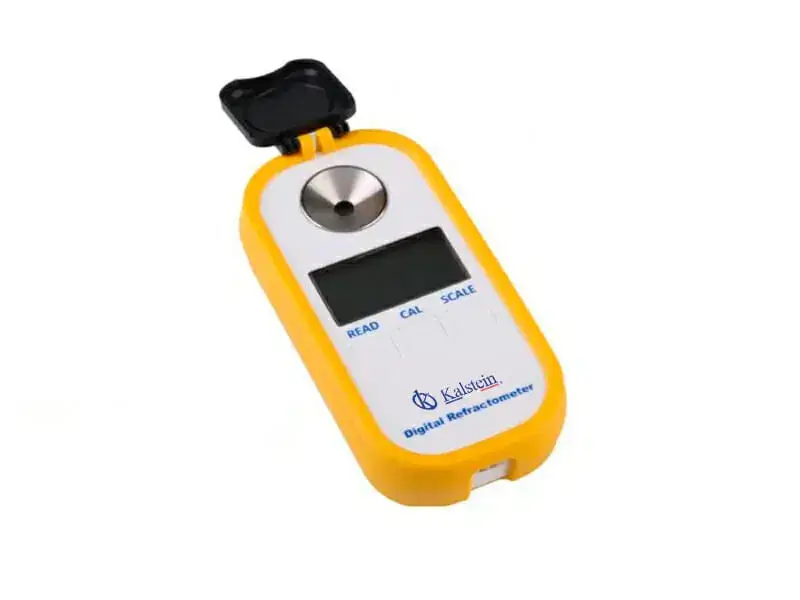
Maximizing ROI and Cost-Benefit Analysis for Digital BRIX+ Salinity Refractometers
In today’s laboratory environment, financial efficiency and effective resource utilization are crucial for success. Understanding the return on investment (ROI) and conducting a thorough cost-benefit analysis for laboratory equipment like Digital BRIX+ Salinity Refractometers can significantly enhance operational efficiency and profitability. This article explores various models, evaluates their cost implications, and provides actionable insights for laboratory professionals.
Understanding ROI and Cost-Benefit Analysis in Laboratories
Return on Investment (ROI) is a key performance metric that helps laboratories assess the profitability of their investments. For laboratory equipment, especially devices like Digital BRIX+ Salinity Refractometers, calculating ROI involves evaluating both direct and indirect costs associated with operation. Cost-benefit analysis complements this by weighing the anticipated benefits against the costs incurred over time.
The critical components to consider include the initial capital expenditure (CAPEX), operational expenditure (OPEX), and the expected payback periods. With the right approach, laboratory professionals can make informed decisions that align with their operational goals and budgets.
Comparison of Available Models
| Model | CAPEX (USD) | Cost per Test (USD) | Payback Period (Months) | Recommended Scenario |
|---|---|---|---|---|
| YR05961 | 76.00 | 0.10 | 4 | Fruit juice testing |
| YR05962 | 76.00 | 0.10 | 4 | Salinity measurement in aquaculture |
| YR05963 | 76.00 | 0.10 | 4 | Brine solutions analysis |
| YR05964 | 76.00 | 0.10 | 4 | Density assessments |
| YR05965 | 76.00 | 0.10 | 4 | Refraction index testing |
Evaluating Initial Investment and Operational Costs
The initial investment for acquiring Digital BRIX+ Salinity Refractometers is modest, with each model priced at $76. However, laboratory professionals must also evaluate the operational costs, including maintenance, calibration, and the cost of consumables associated with each measurement. Understanding these costs is essential for determining the long-term benefits and the sustainability of the equipment.
For instance, the YR05961 model provides reliable Brix measurements for fruit juices, which can be vital for quality control processes. By investing in efficient equipment, laboratories can reduce the cost per test significantly, leading to improved margins over time.
Calculating Payback Periods for Digital BRIX+ Salinity Refractometers
The payback period for laboratory equipment is a crucial metric, indicating how long it will take for the investment to pay for itself through operational savings or increased revenue. With a consistent cost per test of $0.10 across various models, laboratories can expect to recoup their $76 investment within approximately four months, assuming a standard volume of tests performed monthly.
This rapid payback period underscores the efficiency of incorporating Digital BRIX+ Salinity Refractometers into laboratory workflows. By analyzing testing volume and associated costs, laboratories can create tailored strategies to maximize their investment.
Common Mistakes and How to Avoid Them
Laboratory professionals often make mistakes that can impact ROI and cost-benefit analysis. One common mistake is failing to accurately track the operational costs associated with equipment. It's essential to keep detailed records of maintenance, calibration, and consumables used to understand the complete cost picture.
Another error is neglecting to perform a thorough needs assessment before purchasing. Laboratories should evaluate their specific requirements and whether the capabilities of the Digital BRIX+ Salinity Refractometers align with their testing needs. This avoids misalignment and ensures that the right model is chosen for optimal ROI.
Maximizing Efficiency with Digital BRIX+ Salinity Refractometers
Digital BRIX+ Salinity Refractometers are equipped with automatic temperature compensation, which enhances measurement accuracy and efficiency. This feature eliminates the need for manual temperature adjustments, saving valuable time in laboratory operations. Maximizing efficiency not only improves throughput but also enhances cost-effectiveness.
For example, the YR05962 model, designed for salinity measurement, can significantly improve testing cycles in aquaculture settings, where accurate salinity readings are critical for maintaining fish health and optimizing feeding regimes. Improved efficiency can lead to immediate cost savings and increase overall productivity.
Implementing Strategic Laboratory Management Practices
Effective management practices can enhance ROI for laboratory equipment. Establishing regular maintenance schedules for Digital BRIX+ Salinity Refractometers ensures that they operate at peak performance and maintain measurement accuracy, thus reducing long-term operational costs. Additionally, training laboratory personnel on best practices and efficient usage can optimize equipment utilization.
Emphasizing preventive maintenance reduces the likelihood of unexpected repairs, which can lead to increased downtime and costs. Documenting maintenance records and equipment performance metrics will help labs make data-driven decisions regarding their investments.
Frequently Asked Questions
How does the YR05961 model improve ROI in fruit juice testing?
The YR05961 model provides accurate Brix measurements for fruit juices, with a cost per test of just $0.10, allowing labs to quickly recoup its $76 investment within four months. The efficiency of this model ensures reliable quality control, enhancing ROI.
What are the cost considerations for the Digital BRIX+ Salinity Refractometer models?
When considering cost for the Digital BRIX+ Salinity Refractometers, factors such as the initial CAPEX of $76, operational expenses including maintenance and consumables, and the cost per test of $0.10 should be evaluated to optimize budget allocation and ROI.
Which laboratory applications benefit from using YR05962 for salinity measurements?
The YR05962 model is ideal for aquaculture applications where precise salinity measurements are critical. With a cost per test of $0.10, it can enhance efficiency and result in rapid payback, making it a valuable asset in managing aquatic environments.
What metrics can help determine the payback period for refractometers?
The payback period for refractometers can be determined by analyzing initial investment costs, operational costs, and the volume of tests conducted. For instance, the YR05963 model recoups its $76 investment in about four months when testing is consistent.
How can effective management practices enhance Digital BRIX+ Salinity Refractometer usage?
Implementing effective management practices such as regular maintenance, training staff, and maintaining detailed records can significantly enhance the performance of Digital BRIX+ Salinity Refractometers, leading to improved ROI and operational efficiency.
What is the importance of temperature compensation in refractometer efficiency?
Temperature compensation is crucial for ensuring measurement accuracy in Digital BRIX+ Salinity Refractometers. The automatic temperature compensation feature in models like YR05964 eliminates manual adjustments, thus improving testing efficiency and reducing costs.
How do Digital BRIX models compare in terms of operational costs?
All Digital BRIX models, including YR05961, YR05962, YR05963, YR05964, and YR05965, have a consistent cost per test of $0.10, allowing labs to plan operational budgets effectively and maximize ROI through efficient performance.
What strategies can laboratories employ to optimize ROI from refractometers?
To optimize ROI from refractometers, labs can implement regular maintenance schedules, ensure accurate tracking of operational costs, and invest in training personnel on efficient usage to enhance productivity and minimize downtime.
If you are looking for a fusion of innovation and quality, you have come to the right place. At Kalstein, we offer you the luxury of exploring our exclusive catalog of laboratory equipment. We manufacture every device to the highest standards of excellence. Our intuitive and seamless online purchasing channels are designed for your convenience, securing the most competitive prices. Hesitate no longer — we bring science to life, it is time to become part of our community.