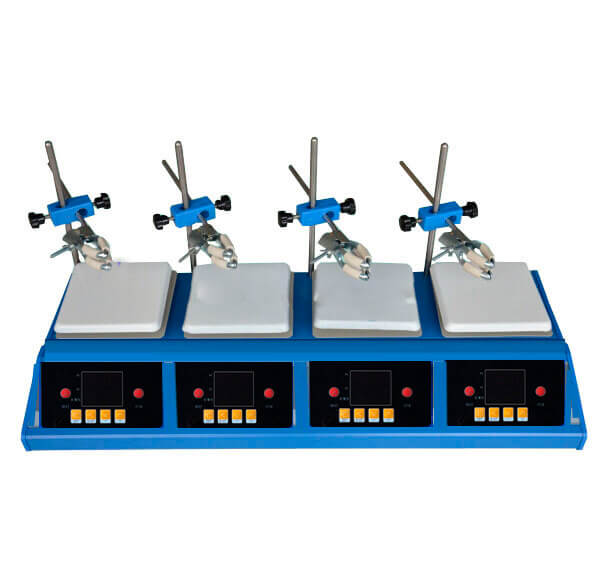
How to Achieve Seamless Integration with LIMS Using Multiposition Intelligent Digital Display Ceramic Hotplate Stirrer
The demand for laboratory efficiency has never been greater, and the integration of Multiposition Intelligent Digital Display Ceramic Hotplate Stirrers with Laboratory Information Management Systems (LIMS) is a key factor in achieving this goal. In this article, we explore how these essential devices can streamline workflows, improve data accuracy, and facilitate better decision-making in laboratory environments.
Understanding the Role of Hotplate Stirrers in Modern Laboratories
Multiposition Intelligent Digital Display Ceramic Hotplate Stirrers, like the YR02953, YR02954, YR02955, YR02947, and YR02948, are integral in many laboratory processes. These devices allow for precise temperature control and stirring capabilities, essential for various chemical and biological experiments. Furthermore, their compatibility with LIMS enables laboratories to digitize data flows, enhancing overall productivity.
Key Features of Multiposition Intelligent Digital Display Ceramic Hotplate Stirrers
These hotplate stirrers come equipped with multiple features that enhance their functionality. The YR02955, for instance, offers six stirring positions along with a temperature range of ambient to 400°C, and a stirring speed from 100 to 1800 RPM. This versatility allows laboratories to perform multiple experiments simultaneously, thus optimizing resource utilization.
Integrating Hotplate Stirrers with LIMS: A Step-by-Step Guide
To achieve seamless integration with LIMS, it is crucial to understand how data flows from the hotplate stirrers to the LIMS platform. The first step involves establishing connectivity protocols, such as HL7 or REST, enabling two-way communication between devices. Next, validating the data structure is essential to ensure accuracy and compliance with laboratory standards.
Connectivity Protocols
Protocols like ASTM and LIS2-A2 are commonly used for laboratory instruments. For instance, the YR02954 supports such protocols, allowing for efficient data transfer and integration. Proper configuration of these protocols ensures that data generated by the stirrers is captured accurately in the LIMS.
Data Sovereignty and Compliance
When integrating with LIMS, understanding data sovereignty and compliance is essential. This involves ensuring that the data collected from the hotplate stirrers complies with regulations such as ISO 17025. The YR02955, with its advanced digital display, helps in maintaining accurate records, which is crucial for meeting compliance standards.
Comparison of Available Models
| Model | Temperature Range | Stirring Speed Range (RPM) | Number of Positions | Best for |
|---|---|---|---|---|
| YR02953 | Ambient to 400°C | 100-1800 | 4 | Small to medium-scale experiments |
| YR02954 | Ambient to 400°C | 100-1800 | 4 | Versatile lab applications |
| YR02955 | Ambient to 400°C | 100-1800 | 6 | High-throughput environments |
| YR02947 | Ambient to 400°C | 0-2000 | 2 | Small experiments with high precision |
| YR02948 | Ambient to 400°C | 0-2000 | 2 | General laboratory use |
Common Mistakes and How to Avoid Them
One of the common pitfalls when integrating Multiposition Intelligent Digital Display Ceramic Hotplate Stirrers with LIMS is underestimating the importance of staff training. Ensuring that laboratory personnel are adequately trained on both the devices and the LIMS software is crucial for a successful integration. Furthermore, neglecting to validate the data flow can lead to significant errors in reporting and compliance.
FAQs
What is the best way to integrate Multiposition Intelligent Digital Display Ceramic Hotplate Stirrers with LIMS?
The best way to integrate is by establishing connectivity protocols, such as HL7. For example, the YR02953 can easily interface with LIMS to ensure accurate data capture and reporting.
How can I ensure compliance with regulations using my hotplate stirrer?
By using models like YR02954, which provide accurate temperature control and data logging, you can ensure compliance with standards like ISO 17025, thus maintaining laboratory integrity.
Which model is best for high-throughput laboratory environments?
The YR02955 is ideal for high-throughput environments due to its six stirring positions and robust temperature control, making it suitable for simultaneous experiments.
How does LIMS integration improve lab data accuracy?
LIMS integration ensures that data from devices like the YR02954 is automatically recorded and validated, reducing the risk of human error during data entry.
What are the key features to look for in a hotplate stirrer for lab integration?
Key features include adjustable temperature and stirring speed, multiple positions, and compatibility with LIMS protocols. The YR02947 exemplifies these features effectively.
Why is staff training important in LIMS integration?
Staff training is crucial to ensure that laboratory personnel can effectively use the hotplate stirrers and the LIMS, minimizing errors and improving data integrity.
Conclusion
Integrating Multiposition Intelligent Digital Display Ceramic Hotplate Stirrers with LIMS not only enhances data flow but also significantly improves laboratory efficiency. By following the outlined steps and understanding the capabilities of each model, laboratories can streamline their operations and ensure compliance. If you are looking for a fusion of innovation and quality, you have come to the right place. At Kalstein, we offer you the luxury of exploring our exclusive catalog of laboratory equipment. We manufacture every device to the highest standards of excellence. Our intuitive and seamless online purchasing channels are designed for your convenience, securing the most competitive prices. Hesitate no longer — we bring science to life, it is time to become part of our community.