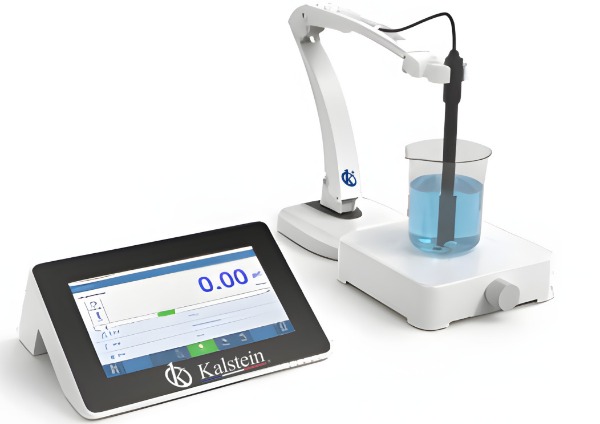
Interpreting Results and Reading Measurements with the YR06616 pH Meter
The YR06616 pH Meter stands out as a multiparameter device designed for accurate measurements in laboratory, industrial, and academic settings. Its capacity to measure conductivity, TDS, salinity, resistivity, and temperature allows users to conduct comprehensive analysis techniques. This article will delve deep into the interpretation of results and reading measurements accurately using the YR06616 pH Meter.
Technical Data Overview
| Model | YR06616 |
|---|---|
| Measurement Range | Conductivity: 0.000 μS/cm – 2000 mS/cm (K=10), TDS: 0.00 mg/L – 1000 g/L, Salinity: (0 – 80) ppt, Resistivity: (0 – 100) MΩ·cm |
| Resolution | 0.001 / 0.01 / 0.1 / 1 μS/cm, 0.001 / 0.01 / 0.1 / 1 mS/cm |
| Accuracy | ±0.5 % |
| Temperature Compensation | Automatic (0 – 100) ℃ |
| Electrode Constant | 0.1 / 1 / 10 cm⁻¹ |
| Data Storage | 2000 sets |
| Power Supply | DC 12V / 1A |
| Protection Rating | IP54 |
| Dimensions / Weight | 215 × 170 × 37 mm / 600 g |
Understanding Measurement Interpretation
When working with the YR06616 pH Meter, understanding how to interpret the displayed measurements is crucial. The device measures several parameters, each crucial for assessing the quality of solutions in various environments.
The main parameters displayed include conductivity, total dissolved solids (TDS), salinity, resistivity, and temperature. Understanding what each parameter indicates can help ensure accurate readings and appropriate interventions. For example, conductivity offers insights into the ionic content of a solution, while TDS provides a comprehensive measure of dissolved substances.
Common Misinterpretations of Readings
Users may encounter common pitfalls when interpreting measurements. For instance, a high conductivity reading could be misinterpreted as high salinity, while it might also indicate other dissolved ions in the solution. Users should familiarize themselves with normal ranges for each parameter to avoid misinterpretation.
It is also essential to consider environmental factors that could affect readings, such as temperature. The YR06616 automatically compensates for temperature variations, but users should understand how these changes may influence their measurement accuracy.
Interpreting Conductivity Measurements
Conductivity measurements indicate how well a solution can conduct electricity, an essential parameter in various applications such as water quality assessment. The YR06616 offers an extensive measurement range from 0.000 μS/cm to 2000 mS/cm, making it a versatile tool.
Understanding the implications of different conductivity values is vital. For instance, ultrapure water would typically have a conductivity of less than 1 μS/cm, whereas seawater could measure around 50,000 μS/cm. Comparing readings against known standards allows users to assess the condition of their samples effectively.
Reading TDS and Salinity Values
Total dissolved solids (TDS) and salinity readings provide insights into the concentration of dissolved substances in solutions. Low TDS readings are indicative of pure water, while higher readings suggest contamination or enrichment of the sample.
Salinity, measured in parts per thousand (ppt), is particularly important in marine applications. Understanding the relationship between TDS and salinity can aid in determining the suitability of water for specific purposes, such as aquaculture or irrigation.
Impact of Temperature on Readings
The YR06616 features automatic temperature compensation, which is crucial since most conductivity measurements are temperature-dependent. Users should be aware that higher temperatures typically increase conductivity as the ions move more freely.
It’s essential to ensure that the temperature reading is accurate and reflects the solution in question. The YR06616’s temperature measurement range from -30.0 to 130.0 °C allows it to function in various environments, but users should still be cautious of extreme conditions that could affect measurement integrity.
Importance of Calibration for Accurate Measurements
Regular calibration is vital for maintaining the accuracy of the YR06616 pH Meter’s readings. Calibration should be performed using standard solutions that are traceable to defined standards. Users should follow the manufacturer’s guidelines for calibration frequency to ensure optimal performance.
Improper calibration can lead to incorrect readings, potentially resulting in misinformed decisions regarding quality control or environmental assessments. Therefore, understanding the calibration process and its significance cannot be overstated.
Frequently Asked Questions
What parameters can the YR06616 pH Meter measure?
The YR06616 pH Meter can measure conductivity, TDS, salinity, resistivity, and temperature, allowing for comprehensive analysis in various laboratory and industrial settings.
Is the YR06616 suitable for professional and academic use?
Yes, the YR06616 is designed for laboratories, industries, universities, and research centers, meeting stringent technical requirements and Good Laboratory Practice (GLP) standards.
Does the device have temperature compensation?
Yes, the YR06616 features automatic temperature compensation within a range of 0 to 100 °C, ensuring accurate measurements despite thermal fluctuations.
How are measurement data stored and exported?
The YR06616 can store up to 2000 sets of measurement data, complete with timestamps and sensor identification, and allows for automatic data export via USB.
What type of electrodes does the YR06616 support?
The YR06616 is compatible with conductivity electrodes with constants of K = 0.1, 1, and 10 cm⁻¹, providing flexibility in measurement ranges and applications.
How often should the YR06616 be calibrated?
To maintain measurement accuracy, it is recommended to perform periodic calibrations on the YR06616, following standard practices for laboratory equipment.
In conclusion, understanding how to interpret results and accurately read measurements using the YR06616 pH Meter is essential for effective laboratory operations. Its advanced features allow for precise analysis across multiple parameters, ultimately facilitating informed decision-making.
If you are looking for a fusion of innovation and quality, you have come to the right place. At Kalstein, we offer you the luxury of exploring our exclusive catalog of laboratory equipment. We manufacture every device to the highest standards of excellence. Our intuitive and seamless online purchasing channels are designed for your convenience, securing the most competitive prices. Hesitate no longer — we bring science to life, it is time to become part of our community.