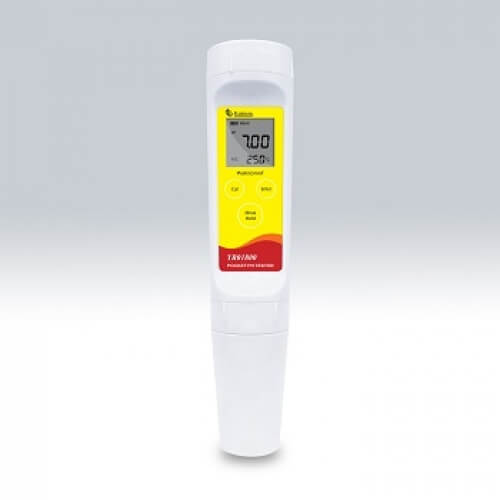
How to Interpret Results and Read Measurements with the YR01802-1 Pocket pH Meter
The YR01802-1 Pocket pH Meter is an essential tool for precise measurement of pH in various settings, including laboratories and fieldwork. This article focuses on how to accurately interpret the results obtained using this model, covering everything from measurement techniques to common pitfalls that could lead to misinterpretation.
Understanding the pH Scale and Measurement Units
The pH scale ranges from 0 to 14, with 7 being neutral. Values below 7 indicate acidity, while values above 7 indicate alkalinity. The YR01802-1 provides readings with a precision of 0.01 pH, allowing users to detect subtle changes in pH that could be critical for their applications.
When interpreting readings from the YR01802-1, it is crucial to remember that pH is logarithmic. A change of one pH unit represents a tenfold change in hydrogen ion concentration. Therefore, readings must be analyzed in the context of their application, ensuring accurate conclusions are drawn from the measurements.
Calibration of the YR01802-1 Pocket pH Meter
Calibration is a fundamental process for ensuring accurate measurements with the YR01802-1. This model supports 1 to 3-point calibration, allowing flexibility based on your application’s requirements. Calibration should be performed using standard buffer solutions, which can either be from the US or NIST standards.
It is essential to ensure that the pH meter is calibrated regularly, especially before critical measurements. Users should also be aware of the automatic recognition feature of the YR01802-1, which simplifies the calibration process. After calibration, it is advisable to test the meter with a known solution to verify accuracy before proceeding with measurements.
Common Misinterpretations of pH Readings
Users often encounter misinterpretations of pH readings due to a lack of understanding of various factors influencing the measurement. For instance, temperature variations can affect pH readings. The YR01802-1 features automatic temperature compensation, which helps mitigate this effect; however, users should still be aware of the temperature at which the measurement is taken.
Another common mistake is assuming that the pH reading is the only parameter that matters in a sample. In some cases, other factors such as ionic strength and temperature can significantly influence results. Therefore, understanding the context of the measurement is essential in drawing correct conclusions.
Interpreting Results in Different Applications
The interpretation of pH measurements can vary greatly depending on the application. In clinical settings, for example, a pH level of 7.4 is typically considered normal for human blood. In contrast, soil testing for agriculture may have optimal pH levels ranging from 6 to 7.5, depending on the crop.
For industrial applications, such as wastewater treatment, specific pH levels are critical for the efficiency of biological processes. It is vital to consult relevant standards and guidelines pertinent to the specific field of application to align results with expected norms.
Technical Specifications of the YR01802-1 Pocket pH Meter
| Model | YR01802-1 |
|---|---|
| pH Range | -1.00 to 15.00 pH |
| Resolution | 0.01 pH |
| Accuracy | ± 0.01 pH |
| Calibration Points | 1 to 3 points |
| Temperature Range | 0 to 60 °C / 32 to 140 °F |
| Power Supply | 2 AAA 1.5V batteries |
| Battery Life | Approximately 200 hours of continuous use |
Frequently Asked Questions
What should I do if the YR01802-1 displays inconsistent readings?
If the YR01802-1 displays inconsistent readings, first ensure that the electrode is clean and properly calibrated. Dirty electrodes can lead to erroneous readings. If the issue persists after calibration and cleaning, the electrode may need replacement.
How often should I calibrate the YR01802-1?
Calibration frequency depends on usage conditions; however, it is advisable to calibrate the YR01802-1 at least once a week or before critical measurements. More frequent calibration may be necessary in high-use or variable temperature environments.
Can I use the YR01802-1 for measuring the pH of solids?
Yes, the YR01802-1 is designed for measuring the pH of semi-solid and liquid samples. The flat surface electrode is particularly useful for ensuring accurate readings in these types of samples.
What is the maximum temperature range for the YR01802-1?
The YR01802-1 can operate within a temperature range of 0 to 60 °C (32 to 140 °F), making it versatile for various applications. Automatic temperature compensation ensures accuracy within this range.
How can I ensure the longevity of my YR01802-1 Pocket pH Meter?
To ensure the longevity of the YR01802-1, store it in a cool, dry place when not in use. Regularly check and replace the electrode as needed, and avoid exposing the device to extreme conditions beyond its specified limits.
What are the common buffer solutions for calibrating the YR01802-1?
The common buffer solutions for calibrating the YR01802-1 are pH 4.01, pH 7.00, and pH 10.01, following US or NIST standards. Using these buffers ensures accurate calibration across the most common pH ranges.
Can I request a quote for the YR01802-1?
Yes, if you are interested in purchasing the YR01802-1 Pocket pH Meter, feel free to request a quote on Kalstein Plus.
If you are looking for a fusion of innovation and quality, you have come to the right place. At Kalstein, we offer you the luxury of exploring our exclusive catalog of laboratory equipment. We manufacture every device to the highest standards of excellence. Our intuitive and seamless online purchasing channels are designed for your convenience, securing the most competitive prices. Hesitate no longer — we bring science to life, it is time to become part of our community.