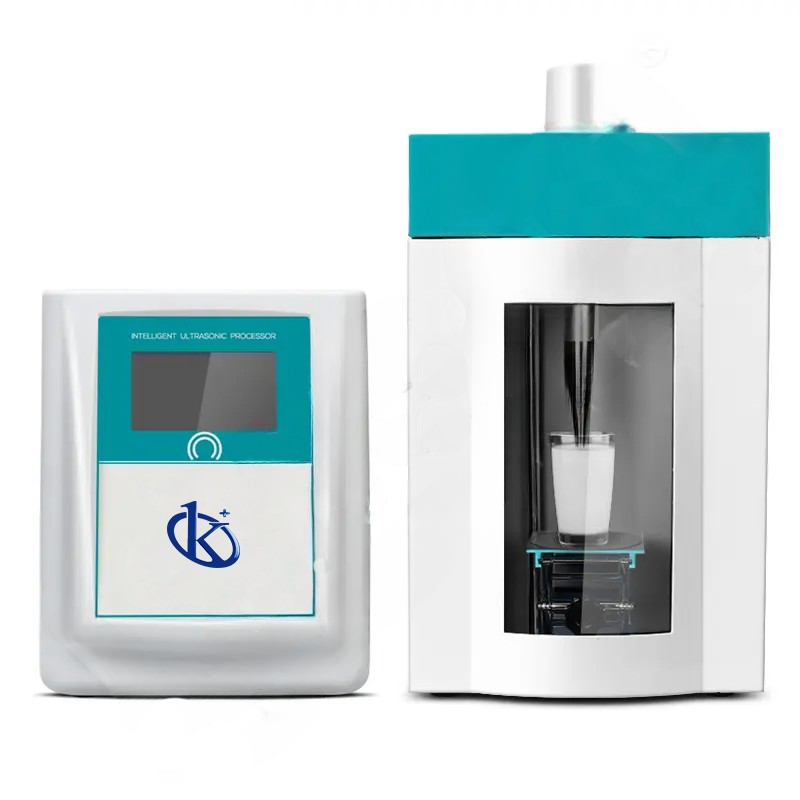
Integrating Ultrasonic Homogenizers with LIMS for Enhanced Data Flow Management
In the modern laboratory environment, the integration of ultrasonic homogenizers with Laboratory Information Management Systems (LIMS) plays a crucial role in optimizing workflow and ensuring accurate data management. This article delves into the various models of ultrasonic homogenizers available and how they can be effectively integrated with LIMS to enhance data flow.
Understanding Ultrasonic Homogenizers in the Context of LIMS Integration
Ultrasonic homogenizers are widely used in laboratories for sample preparation, particularly for emulsifying, dispersing, and homogenizing fluids. The ability to efficiently integrate these devices with LIMS systems is paramount for laboratories that prioritize data integrity and streamlined operations. Through LIMS integration, ultrasonic homogenizers can automate data recording, improve traceability, and ensure compliance with various standards. This integration allows for real-time monitoring and adjustment of processes, making it easier to analyze results and maintain quality control.
Key Benefits of LIMS Integration for Ultrasonic Homogenizers
Integrating ultrasonic homogenizers with LIMS provides multiple benefits, including improved data accuracy, enhanced operational efficiency, and better regulatory compliance. By automating data recording, laboratories can minimize human error and ensure that critical information is captured and stored securely. Furthermore, LIMS facilitates better data sharing among team members, promoting collaboration and improving productivity.
Available Models of Ultrasonic Homogenizers
There are several models of ultrasonic homogenizers available, each with unique features suitable for different laboratory needs. Below is a comparison of the models:
Comparison of Available Models
| Model | Power (W) | Mixing Capacity (ml) | Price (USD) | Best for |
|---|---|---|---|---|
| YR05015 | 1.5 – 150 | 0.1 – 150 | 756.00 | Basic emulsification |
| YR05016 | 2-5 – 250 | 0.1 – 300 | 882.00 | Medium scale mixing |
| YR05017 | 10 – 650 | 0.1 – 500 | 1050.00 | High volume operations |
| YR05018 | 10 – 900 | 0.1 – 600 | 1281.00 | Advanced applications |
| YR05019 | 20 – 1 200 | 1 – 1 000 | 1785.00 | Large-scale production |
| YR05020 | 50 – 1 800 | 1 – 1 200 | 2058.00 | Industrial applications |
Common Mistakes and How to Avoid Them
One of the most common mistakes laboratories make when integrating ultrasonic homogenizers with LIMS is failing to establish clear protocols for data management. It is crucial to define the data entry processes and ensure that all users are trained on how to use the system effectively. Additionally, neglecting regular maintenance of the homogenizers can lead to data inaccuracies. Laboratories should implement a routine check to ensure that all equipment is functioning correctly and that data is being recorded accurately.
Addressing LIMS Compatibility and Integration Challenges
When integrating ultrasonic homogenizers with LIMS, laboratories may face compatibility challenges. It is essential to choose homogenizers that support standard communication protocols such as HL7 or ASTM. This ensures seamless data exchange and reduces the effort required for integration. Furthermore, laboratories must involve IT teams early in the process to address potential integration issues proactively.
Data Flow and Connectivity Protocols
Effective data flow management relies on the right connectivity protocols. Understanding how your ultrasonic homogenizer can communicate with LIMS is vital. Many modern homogenizers, like the YR05020, offer optional computer communication features that facilitate data transfer. Protocols such as REST, middleware, and direct API connections help to ensure that the integration is efficient and that data is accessible when needed.
Optimizing Workflow with LIMS-Integrated Ultrasonic Homogenizers
The integration of LIMS with ultrasonic homogenizers can significantly optimize laboratory workflows. By automating data capture during the homogenization process, laboratories can reduce time spent on manual entries and minimize errors. Furthermore, real-time monitoring of sample processing can provide insights into performance and help identify bottlenecks in workflows, allowing for timely interventions.
Frequently Asked Questions
How can ultrasonic homogenizers help in LIMS integration for data management?
Ultrasonic homogenizers like the YR05016 can enhance LIMS integration by automating data capture, which reduces manual errors and improves data accuracy. This ensures efficient data management in laboratory environments.
What features should I look for in ultrasonic homogenizers for LIMS connectivity?
When selecting ultrasonic homogenizers for LIMS connectivity, look for models that support standard protocols such as HL7 or ASTM. The YR05019 is an excellent example, offering seamless integration capabilities.
Which ultrasonic homogenizer is best for high-throughput applications in a LIMS environment?
The YR05020 is ideal for high-throughput applications within LIMS environments, as it offers powerful processing capabilities and large mixing capacities, ensuring efficient sample handling.
How can I ensure data accuracy when using ultrasonic homogenizers with LIMS?
To ensure data accuracy, utilize models like the YR05018 that provide automated data recording features. This minimizes human error and guarantees that critical information is recorded in LIMS.
What are the costs involved in integrating ultrasonic homogenizers with LIMS?
The costs of integrating ultrasonic homogenizers with LIMS can vary. For instance, the YR05017 is priced at $1050, and additional LIMS software costs must also be considered for a complete integration.
How can regular maintenance improve the performance of ultrasonic homogenizers in a LIMS setup?
Regular maintenance of ultrasonic homogenizers, such as the YR05015, is crucial in a LIMS setup as it ensures equipment performance, thus maintaining data accuracy and reliability throughout the integration process.
Which ultrasonic homogenizer model is recommended for laboratories focusing on compliance?
The YR05019 is highly recommended for laboratories that focus on compliance due to its robust features that ensure accurate data capture and integration within LIMS, facilitating adherence to regulatory standards.
What should laboratories consider when implementing LIMS with ultrasonic homogenizers?
Laboratories should consider the compatibility of their ultrasonic homogenizers with existing LIMS systems, as well as available communication protocols. Choosing a model like the YR05016 can help streamline the integration process.
If you are looking for a fusion of innovation and quality, you have come to the right place. At Kalstein, we offer you the luxury of exploring our exclusive catalog of laboratory equipment. We manufacture every device to the highest standards of excellence. Our intuitive and seamless online purchasing channels are designed for your convenience, securing the most competitive prices. Hesitate no longer — we bring science to life, it is time to become part of our community.