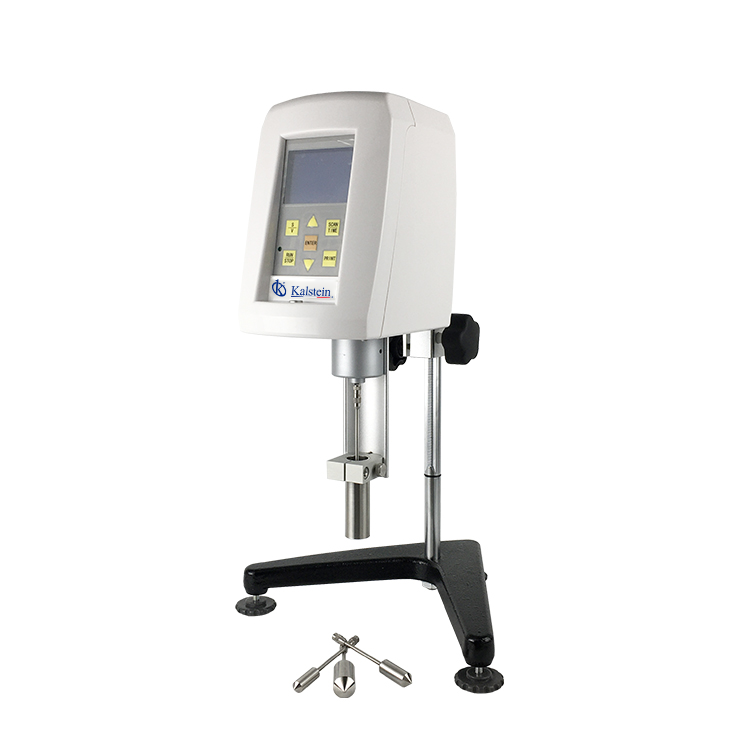
Digital Viscometer YR05840: Principle of Operation and Scientific Fundamentals
The Digital Viscometer YR05840 is a cutting-edge instrument designed for measuring the viscosity of small sample sizes. Its innovative coaxial structure, precision temperature control, and advanced measurement capabilities make it an essential tool for various applications in both industrial and laboratory settings. Understanding the principle of operation and the scientific fundamentals that underlie this equipment is crucial for its effective use and reliable results.
Principle of Operation
The YR05840 operates on the principle of coaxiality. This design allows for accurate measurement of viscosity by minimizing the impact of sample size on the results. The viscometer employs a rotor that is submerged in the test sample, and the fluid's resistance against the rotor's movement is measured. This resistance is directly related to the viscosity of the fluid. The viscometer utilizes the following equation to calculate viscosity:
Viscosity (η) = F / (A * dv/dx)
- F = Force applied on the rotor
- A = Area of the rotor
- dv/dx = Velocity gradient of the fluid
This equation illustrates how the viscosity is affected by the force acting on the rotor and the fluid's velocity gradient. The coaxial configuration enhances measurement precision by providing a uniform shear rate across a wide range of viscosities.
Scientific Fundamentals
At the core of the YR05840's operation is the science of fluid mechanics. Viscosity is a measure of a fluid's resistance to flow, which is influenced by temperature, shear rate, and the nature of the fluid itself. Understanding these factors is essential for proper calibration and accurate readings.
The relationship between viscosity and temperature is particularly important. As temperature increases, the viscosity of most fluids decreases, making it easier for them to flow. The YR05840 is equipped with a temperature control range from ambient plus 10°C to 250°C, with an optional heating furnace reaching up to 300°C. This rapid and precise temperature control allows operators to obtain consistent measurements across different sample types.
Technical Specifications of YR05840
| Model | YR05840 | Brand | Kalstein |
|---|---|---|---|
| Measurement Range (mPa.s) | 6.4 – 2M | Speed (r/min) | 0.5/1/2/2.5/4/5/10/15/20/25/30/40/50/60/70/80/90/100 Total 18 |
| Test Error | ±2% (Newtonian liquid) | Repetitive Error | ±1% (Newtonian liquid) |
| Temperature Control | Precision 0.1℃ | Interface | Two RS232 interfaces |
Installation and Initial Setup
Setting up the YR05840 viscometer requires careful attention to detail to ensure optimal performance. Upon unboxing, the following checklist should be followed:
- Check for all components: viscometer, small sample adapter, power cord, and user manual.
- Ensure the unit is placed on a stable, level surface to prevent measurement errors.
- Connect the RS232 interface to a microprinter or computer as needed for data logging and printing.
- Power on the unit and allow it to initialize, following the instructions in the user manual.
- Calibrate the device using the provided calibration standards before performing actual measurements.
Common setup mistakes include improper leveling, neglecting to calibrate, and incorrect temperature settings. Ensuring correct installation will lead to more accurate and reliable viscosity readings.
Interpretation of Results
The YR05840 provides viscosity measurements in milliPascal-seconds (mPa.s). It is essential to understand how to interpret these results:
- Normal viscosity ranges vary depending on the fluid being tested; for instance, the viscosity of water is around 1 mPa.s at room temperature, while honey can range from 200 to 5000 mPa.s.
- Measuring non-Newtonian fluids can be complex, as their viscosity may change under different shear rates and temperatures.
- Results should be documented and analyzed over time to identify trends or anomalies in viscosity that could indicate changes in the fluid's condition or quality.
Maintaining a standard for comparison is crucial for ensuring the reliability of the data collected.
Frequently Asked Questions
What is the measurement range of the YR05840 viscometer?
The YR05840 viscometer has a measurement range from 6.4 to 2 million mPa.s, allowing for a wide variety of fluids to be tested.
How does temperature affect viscosity measurements in the YR05840?
Temperature significantly impacts viscosity, typically decreasing it. The YR05840 allows for precise temperature control which helps in obtaining consistent measurements.
What types of fluids can be tested with the YR05840?
The YR05840 is suitable for a range of fluids, including non-Newtonian fluids, asphalt, colophony, and hot melt adhesives.
What calibrations are needed before using the YR05840?
Before use, the YR05840 should be calibrated using standard viscosity samples to ensure accuracy in measurements.
Can the YR05840 be connected to a computer for data logging?
Yes, the YR05840 has two RS232 interfaces that allow it to connect to a printer or computer for data logging and analysis.
If you are interested in acquiring the Digital Viscometer YR05840 or want to learn more, feel free to request a quote on Kalstein Plus.
If you are looking for a fusion of innovation and quality, you have come to the right place. At Kalstein, we offer you the luxury of exploring our exclusive catalog of laboratory equipment. We manufacture every device to the highest standards of excellence. Our intuitive and seamless online purchasing channels are designed for your convenience, securing the most competitive prices. Hesitate no longer — we bring science to life, it is time to become part of our community.