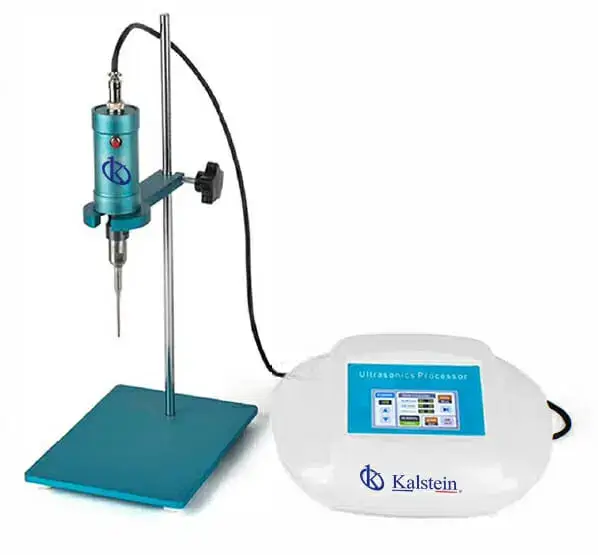
Comparative Analysis of Ultrasonic Homogenizers: Choosing the Right Model for Your Laboratory
Ultrasonic homogenizers play a crucial role in various laboratory applications, providing efficient sample preparation and processing capabilities. This article delves into a comparative analysis of several ultrasonic homogenizer models, focusing on their features, performance, and suitability for diverse laboratory needs. Understanding the nuances between different models enables laboratory professionals to make informed decisions tailored to their specific processing requirements.
Understanding Ultrasonic Homogenizers
Ultrasonic homogenizers, also known as sonicators, utilize ultrasonic waves to create cavitation bubbles in liquids. These bubbles collapse violently, resulting in high shear forces that effectively disrupt cells, emulsify mixtures, and facilitate chemical reactions. Ultrasonic homogenizers are essential tools in fields ranging from biotechnology to food processing, playing a pivotal role in achieving desired sample consistency and homogeneity.
Comparison of Available Models
| Model | Ultrasonic Power (W) | Frequency (KHz) | Capacity (ml) | Price (USD) |
|---|---|---|---|---|
| YR05829 | 5-150 | 19-25 | 0.1-50 | 659.00 |
| YR05830 | 5-250 | 19-25 | 0.5-100 | 659.00 |
| YR05831 | 5-400 | 19-25 | 0.5-300 | 699.00 |
| YR05831-op1 | 5-400 | 19-25 | 0.5-300 | 149.00 |
| YR05831-op2 | 5-400 | 19-25 | 0.5-300 | 95.00 |
| YR05832 | 650 | 20-25 | 0.2-500 | 1050.00 |
Key Features and Applications
Each ultrasonic homogenizer model presents distinct features and capabilities tailored to specific applications:
YR05829
The YR05829 model is known for its versatility, with ultrasonic power ranging from 5 to 150 W and a frequency of 19-25 KHz. This model is perfect for small sample processing (0.1-50 ml) and is ideal for applications requiring moderate power input without compromising sample integrity.
YR05830
The YR05830 offers higher ultrasonic power (5-250 W) and increased capacity (0.5-100 ml), making it suitable for larger samples while maintaining effective cavitation. This model is particularly advantageous for laboratories focused on homogenizing emulsions or dispersions.
YR05831
With an impressive ultrasonic power of 5-400 W and a higher capacity of up to 300 ml, the YR05831 is designed for intensive applications. This model excels in breaking down tough cellular structures, making it a go-to choice for researchers involved in complex biological applications.
YR05831-op1 and YR05831-op2
Both the YR05831-op1 and YR05831-op2 models maintain the same ultrasonic power and capacity as the YR05831 but provide cost-effective options for budget-conscious laboratories. They can be effectively utilized in educational settings or smaller labs focusing on routine sample preparation.
YR05832
The YR05832 model stands out with its maximum ultrasonic power of 650 W, making it suitable for high-demand applications. With a liquid processing capacity of up to 500 ml, it is ideal for large-scale or industrial applications where more robust processing is required.
Common Mistakes and How to Avoid Them
When selecting an ultrasonic homogenizer, laboratory professionals often make several common mistakes:
- Neglecting Sample Volume: Always ensure the model's capacity aligns with your sample volume needs. Choosing a model like the YR05831 for large samples prevents processing delays.
- Overlooking Power Requirements: Assess the power needed for your specific applications. A model with insufficient power will not achieve desired results.
- Ignoring Maintenance Needs: Regular calibration and maintenance are essential for consistent performance. Ensure you have a maintenance plan in place for models like YR05832 which require more care due to their higher power.
Frequently Asked Questions
How do I choose the right ultrasonic homogenizer for emulsification in my laboratory?
Choosing the right ultrasonic homogenizer for emulsification involves assessing your sample volume and desired consistency. Models like the YR05830, with a capacity of 0.5-100 ml and powerful ultrasonic output, are excellent for this purpose.
Which ultrasonic homogenizer model is most efficient for cell disruption applications?
The YR05831, with a power range of 5-400 W and capacity for larger sample volumes, is highly efficient for cell disruption applications, making it suitable for laboratories focusing on biological specimens.
What factors should I consider when comparing ultrasonic homogenizer prices?
When comparing prices, consider the model's power, capacity, and application suitability. For example, the YR05832, priced at $1050.00, offers higher power for industrial applications, providing better value for large-scale needs.
Can I use ultrasonic homogenizers for particle size reduction?
Yes, ultrasonic homogenizers are effective for particle size reduction. Models like the YR05831 are particularly adept at this, offering adjustable power settings for optimal size control.
What is the expected lifespan of an ultrasonic homogenizer?
The lifespan of an ultrasonic homogenizer varies by usage, but with proper maintenance, models like the YR05832 can last several years, particularly when used in accordance with manufacturer guidelines.
How often should I calibrate my ultrasonic homogenizer?
Calibration frequency depends on usage intensity; however, it is recommended to calibrate ultrasonic homogenizers like the YR05829 at least annually to ensure optimal performance and accuracy.
What is the best ultrasonic homogenizer for educational laboratories?
The YR05831-op2 is an excellent choice for educational laboratories due to its affordability and effective performance for routine experiments, making it ideal for teaching scenarios.
How do ultrasonic homogenizers contribute to sustainability in laboratory settings?
Ultrasonic homogenizers, especially models like the YR05832, help reduce reagent waste by ensuring complete sample processing with less material, contributing to more sustainable laboratory practices.
If you are looking for a fusion of innovation and quality, you have come to the right place. At Kalstein, we offer you the luxury of exploring our exclusive catalog of laboratory equipment. We manufacture every device to the highest standards of excellence. Our intuitive and seamless online purchasing channels are designed for your convenience, securing the most competitive prices. Hesitate no longer — we bring science to life, it is time to become part of our community.