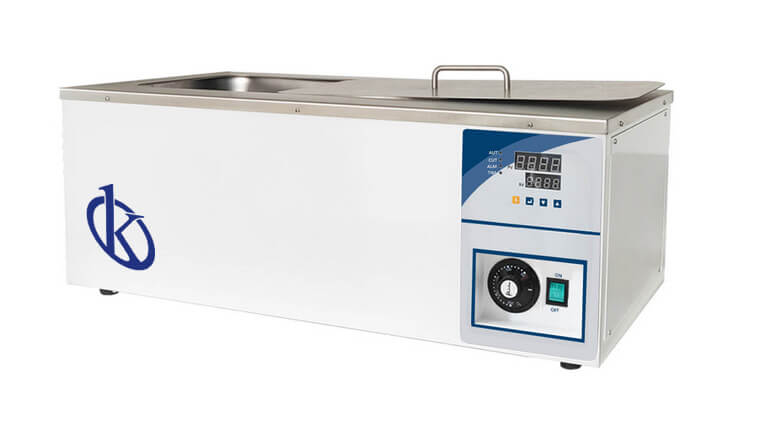
Comparative Analysis of Oil Baths: Selecting the Best Model for Laboratory Applications
In laboratory settings, temperature control is critical for various applications, including biochemical analysis and sample preservation. Oil baths present a reliable solution for maintaining stable temperatures, making them essential tools in many laboratories. This article provides a comparative analysis of oil baths, focusing on their features, benefits, and how they measure up against alternative technologies.
Understanding Oil Baths and Their Applications
Oil baths are utilized in diverse fields such as bioengineering, medical research, food technology, and chemical industries. They provide precise temperature control, crucial for experiments that require consistent thermal conditions. Researchers often prefer oil baths over water baths due to their higher boiling points, allowing for elevated temperature experiments without the risk of evaporation.
Furthermore, oil baths can minimize heat loss and enhance accuracy in temperature-sensitive processes. Thus, selecting an appropriate model tailored for specific laboratory needs is vital for optimal performance.
Comparison of Available Models
| Model Code | Temperature Range (°C) | Power (W) | Best For | Price (USD) |
|---|---|---|---|---|
| YR04973 | RT +5 to 250 | 1000 | General laboratory use | 150.00 |
| YR04974 | RT +5 to 250 | 1200 | Food and chemical testing | 165.00 |
| YR04975 | RT +5 to 250 | 1600 | Bioengineering applications | 192.00 |
| YR04976 | RT +5 to 250 | 2000 | High-throughput laboratories | 250.00 |
Key Features of Oil Baths
When selecting an oil bath, several features should be considered:
- Temperature Control: Look for models equipped with intelligent microcomputer control for precise temperature management.
- Dual Use: Some models support both oil and water, enhancing their versatility in different laboratory settings.
- Safety Features: Ensure the unit includes overcurrent protection, over-temperature alarms, and mechanical temperature limiters for user safety.
- Timer Settings: A timer function can help regulate experiments and ensure optimal performance.
Common Mistakes and How to Avoid Them
Laboratory professionals often make mistakes when selecting an oil bath. Here are some common pitfalls:
- Ignoring Temperature Range: Ensure the selected model has a temperature range suitable for your specific applications. For example, YR04976 is ideal for high-temperature experiments up to 250°C.
- Underestimating Power Requirements: Choose a model with adequate power output to maintain stability; for example, the YR04975 offers 1600W, suitable for demanding tasks.
- Neglecting Safety Features: Always assess safety features to protect users and ensure compliance with lab safety regulations.
Comparing Oil Baths with Alternative Technologies
Oil baths face competition from other temperature control systems, such as water baths and dry block heaters. Here’s a comparative breakdown:
| Feature | Oil Bath | Water Bath | Dry Block Heater |
|---|---|---|---|
| Temperature Range | RT +5 to 250°C | RT to 100°C | RT to 200°C |
| Heat Stability | High | Medium | High |
| Cost | Moderate | Low | High |
Advantages of Using Oil Baths
Oil baths offer numerous advantages that make them preferable for specific laboratory applications:
- Higher Temperature Capacity: Unlike water baths, oil baths can sustain higher temperatures, making them suitable for various chemical reactions.
- Reduced Evaporation: Oil minimizes evaporation losses, ensuring sample integrity over extended periods.
- Energy Efficiency: Oil baths retain heat effectively, leading to lower energy consumption overall.
Frequently Asked Questions
What is the temperature range of the YR04973 oil bath?
The YR04973 oil bath has a temperature range of RT +5 to 250°C, making it suitable for general laboratory applications where precise temperature control is essential.
How does the YR04974 compare to water baths in terms of performance?
The YR04974 oil bath outperforms water baths by maintaining stable temperatures up to 250°C, which is crucial for tasks that exceed the boiling point of water.
What safety features should I look for in an oil bath model?
Look for models like the YR04975 that include overcurrent protection, over-temperature alarms, and mechanical temperature limiters to enhance user safety during operation.
Which oil bath is best for high-throughput laboratories?
The YR04976, with its 2000W power output, is ideal for high-throughput laboratories needing rapid temperature adjustments and stable conditions for multiple samples.
What are the energy savings when using oil baths compared to water baths?
Oil baths like the YR04974 are more energy-efficient due to their effective heat retention, potentially leading to significant energy savings in frequent high-temperature applications.
How do oil baths enhance sample integrity during long experiments?
Oil baths minimize evaporation losses and maintain consistent temperatures, enhancing sample integrity over long experiments, particularly critical in chemical reactions.
What are the advantages of dual-use oil baths?
Dual-use oil baths, such as the YR04975, offer versatility by allowing users to switch between oil and water, accommodating various experimental needs.
What applications are best suited for high-temperature oil baths?
High-temperature oil baths like the YR04976 are best for applications in materials science, chemical synthesis, and any process requiring temperatures above 100°C.
If you are looking for a fusion of innovation and quality, you have come to the right place. At Kalstein, we offer you the luxury of exploring our exclusive catalog of laboratory equipment. We manufacture every device to the highest standards of excellence. Our intuitive and seamless online purchasing channels are designed for your convenience, securing the most competitive prices. Hesitate no longer — we bring science to life, it is time to become part of our community.