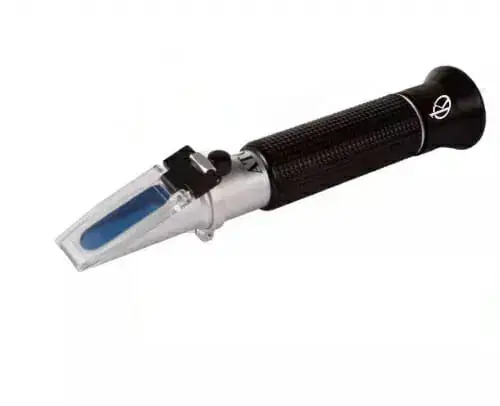
How to Utilize Car Refractometers in University Research Projects
Car refractometers are essential tools in laboratory settings, especially in university research projects that involve the analysis of antifreeze solutions and other liquid properties. Their ability to provide precise measurements of refractive index makes them invaluable for researchers in various academic fields. This article delves into how car refractometers can facilitate university research, comparing different models and discussing their specific applications and advantages.
Understanding the Role of Car Refractometers in Academic Research
Car refractometers are devices designed to measure the refractive index of liquid solutions, which can be particularly useful in research settings that focus on chemical concentrations and properties. For instance, researchers can assess the freezing points of antifreeze solutions, which is critical in automotive engineering studies. This tool supports various academic disciplines, including chemistry, materials science, and environmental studies, by allowing students and researchers to conduct experiments that require accurate concentration measurements.
Comparison of Available Models
| Model Code | Measurement Range | Min. Division | Precision | Best For |
|---|---|---|---|---|
| YR05916 | E: -60°C to 0°C, P: -50°C to 0°C | 0.01sg | ±0.01sg ±5°C | Testing antifreeze concentration |
| YR05917 | E: -60°C to 0°C, P: -50°C to 0°C | 0.01sg | ±0.01sg ±5°C | Measuring windshield washer fluid concentration |
| YR05918 | E: -60°F to 32°F, P: -50°F to 32°F | 0.01sg | ±0.01sg ±5°F | Analyzing diverse antifreeze solutions |
| YR05919 | E: -60°C to 0°C, P: -50°C to 0°C | 0.01sg | ±0.01sg ±5°C | General laboratory use |
| YR05920 | E: -60°C to 0°C, P: -50°C to 0°C | 0.01sg | ±0.01sg ±5°C | Research involving coolant systems |
| YR05921 | E: -60°C to 0°C, P: -50°C to 0°C | 0.01sg | ±0.01sg ±5°C | Education and practical experiments |
Practical Applications in University Research
In the realm of university research, car refractometers can be employed in various applications. For example, in materials science, students may investigate the properties of new antifreeze formulations. Researchers could utilize the YR05916 model to measure the freezing point depression of a new coolant, validating its effectiveness compared to traditional solutions.
Furthermore, in automotive engineering projects, students can conduct experiments on how different antifreeze concentrations affect engine performance under various conditions. By using the YR05918 refractometer, they can accurately assess the chemical properties that influence engine efficiency, thereby enhancing their practical learning experience.
Integration into Curriculum and Research Projects
Car refractometers can be integrated into laboratory curriculums, providing hands-on experiences that reinforce theoretical knowledge. Teaching students the mechanics of these devices fosters a deeper understanding of refractive index concepts and their real-world applications. Research projects can also benefit by allowing students to explore innovative solutions in materials that require precise concentration measurements, thereby preparing them for future industry challenges.
Common Mistakes and How to Avoid Them
One common mistake when using car refractometers is neglecting the calibration process. Regular calibration is crucial to ensure accurate readings, especially when conducting critical experiments. Users should adhere to specified calibration intervals based on the model, such as the YR05917, which recommends calibration at least monthly.
Another mistake is failing to account for temperature variations. Since refractometers like the YR05919 are sensitive to temperature, it is essential to allow samples to reach room temperature before testing. This practice helps prevent measurement errors linked to thermal expansion or contraction of the liquid being analyzed.
Best Practices for Effective Use
To maximize the effectiveness of car refractometers in research, consider implementing the following best practices:
- Routine Calibration: Schedule regular calibration sessions to maintain measurement accuracy.
- Sample Preparation: Ensure samples are free of bubbles and contaminants before testing.
- Documentation: Keep detailed records of measurements, calibration dates, and any anomalies observed during testing.
- Training: Provide comprehensive training for students on how to operate the refractometers correctly.
Frequently Asked Questions
What types of solutions can I measure with car refractometers for university research?
Car refractometers like YR05916 are ideal for measuring antifreeze solutions, specifically the concentration of ethylene glycol and propylene glycol in coolant systems. They can also assess windshield washer fluid, making them versatile tools in automotive research projects.
How accurate are the readings of car refractometers in academic experiments?
The car refractometers, such as the YR05917, provide high precision with an accuracy of ±0.01sg, making them suitable for academic experiments that require reliable measurements of liquid concentrations.
Which car refractometer is best for testing antifreeze concentrations in a university lab?
The YR05920 model is excellent for testing antifreeze concentrations due to its wide measurement range from -60°C to 0°C. This feature allows students to experiment with various coolant formulations effectively.
Can I use car refractometers for other applications outside automotive studies?
Yes, while primarily used in automotive contexts, car refractometers like YR05919 can also be utilized in chemistry labs for analyzing various liquid solutions, making them useful for broader scientific research.
How frequently should I calibrate my car refractometer during research projects?
It is advised to calibrate car refractometers, such as the YR05921, at least once a month or whenever there is a significant temperature change in the laboratory to ensure accurate results in research experiments.
What are the most common errors when using car refractometers for research?
Common errors include improper calibration, neglecting temperature adjustments, and not preparing samples adequately. Avoiding these errors is crucial for obtaining reliable data during experiments using models like YR05918.
How do car refractometers contribute to effective university research outcomes?
Car refractometers enhance university research outcomes by providing precise and reliable data on liquid concentrations, facilitating experiments that lead to significant findings in fields such as automotive engineering and materials science.
Where can I request a quote for purchasing a car refractometer for academic use?
You can request a quote for car refractometers tailored for academic use through our dedicated services, ensuring you get the best equipment for your research needs.
If you are looking for a fusion of innovation and quality, you have come to the right place. At Kalstein, we offer you the luxury of exploring our exclusive catalog of laboratory equipment. We manufacture every device to the highest standards of excellence. Our intuitive and seamless online purchasing channels are designed for your convenience, securing the most competitive prices. Hesitate no longer — we bring science to life, it is time to become part of our community.