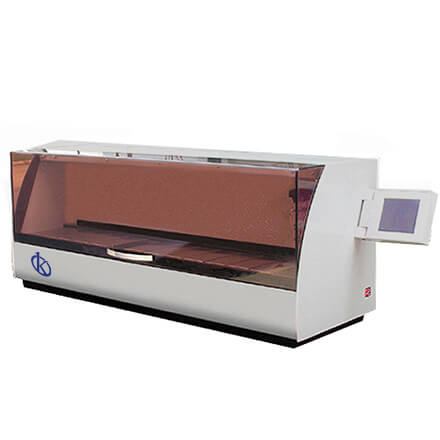
Automatic Slide Stainers: Applications in Research, Biotechnology, and Academia 2026
Automatic slide stainers are essential tools in laboratories, enabling efficient and uniform staining of biological specimens on slides. They play a crucial role in enhancing the quality of histological and cytological examinations, thereby aiding in research, biotechnology, and academic settings. This article explores the applications, techniques, and best practices for using automatic slide stainers in 2026.
What is it used for in 2026
In 2026, automatic slide stainers are primarily used for preparing tissue samples for microscopic examination. These devices streamline the staining processes, ensuring reproducibility and accuracy in results. Applications include:
- Histopathology: Analyzing tissue samples for disease diagnosis.
- Cytology: Examining cell samples for abnormalities.
- Immunohistochemistry: Highlighting specific antigens in tissues to study cellular processes.
- Research: Supporting various studies in biology and medicine by providing high-quality stained samples.
History and evolution of the technology
The development of automatic slide stainers began in the late 20th century, driven by the need for standardization and efficiency in laboratory practices. Early models were manual and time-consuming, requiring skilled technicians to perform multiple steps sequentially. Over the years, advancements in technology led to the introduction of automated systems, integrating user-friendly interfaces and advanced programming. Today, modern automatic slide stainers feature:
- Touchscreen controls for easy operation.
- Flexible staining protocols tailored to diverse laboratory needs.
- Improved fluid management systems that enhance water usage efficiency.
How to use it step by step
Using an automatic slide stainer involves several steps to ensure optimal results:
- Preparation of slides: Place the prepared tissue or cell samples onto the slides and ensure they are properly labeled.
- Loading the stainer: Insert the slides into the designated holder and load necessary reagents into their respective stations.
- Setting up the machine: Select the desired staining protocol through the touchscreen interface, adjusting parameters as needed.
- Running the stain: Initiate the staining process and monitor progress via the display interface.
- Post-staining procedures: Once completed, remove the slides and perform any required drying or mounting processes.
Best techniques and protocols
To achieve high-quality staining results, it is important to follow established techniques and protocols:
- Use calibrated reagents and maintain them at optimal storage conditions.
- Regularly update and customize staining protocols based on specific research requirements.
- Implement control slides to ensure the accuracy of staining outcomes.
- Clean the equipment as per the manufacturer’s guidelines to prevent contamination.
Practical applications by laboratory type
Different laboratory types utilize automatic slide stainers in various ways:
- Clinical Laboratories: Expedite diagnostic processes in pathology and cytology.
- Research Laboratories: Investigate diseases and develop treatments through high-throughput staining.
- Biotechnology Firms: Support drug development and genetic research by providing essential tissue analysis.
Regulations, standards and certifications
Compliance with regulations and industry standards is key in laboratory operations. Automatic slide stainers must meet guidelines set by:
- FDA for medical devices.
- ISO standards for quality management systems.
- Clinical Laboratory Improvement Amendments (CLIA) for laboratory testing.
Comparison with alternative technologies
While automatic slide stainers are widely used, several alternative technologies exist:
- Manual Staining: Offers flexibility but requires more time and labor.
- Robotic Stainers: Enhance throughput but can be more complex and costly.
- Microwave Staining: Faster staining times but may require adjustment in protocols.
Comparison of available models
| Model | Best for | Key specs | Recommended use case |
|---|---|---|---|
| YR435 | High-throughput labs needing efficient water management | 14 processing cups, 72 slides simultaneously | Histopathology labs with large sample volumes |
| YR435-1 | Versatile staining for various protocols | 400 slides/hour, 30 slide capacity | Research labs requiring rapid staining |
| YR436-1 | Compact design for limited space | 15 tanks, adjustable treatment times | Small laboratories needing efficient workflows |
Common mistakes and how to avoid them
Laboratory professionals often encounter challenges when using automatic slide stainers. Common mistakes include:
- Not following the manufacturer’s instructions.
- Using expired or improperly stored reagents.
- Neglecting routine maintenance and calibration.
To avoid these issues, it is important to:
- Conduct regular training sessions for lab personnel.
- Keep a log of maintenance and calibration activities.
- Implement a quality control program.
Maintenance, calibration and good practices 2026
Proper maintenance and calibration are vital for the longevity and performance of automatic slide stainers:
- Follow a routine cleaning schedule to prevent contamination.
- Calibrate according to the manufacturer’s instructions for accurate results.
- Document maintenance checks and repairs to track performance history.
Cost-benefit analysis 2026
Investing in automatic slide stainers provides numerous benefits:
- Increased Efficiency: Automation speeds up the staining process, allowing for more samples to be processed in a shorter time.
- Improved Accuracy: Automated systems reduce human error, leading to more reliable results.
- Cost Savings: While the initial investment may be significant, the long-term savings in labor and reagent usage justify the costs.
Frequently asked questions
What should I consider when choosing an automatic slide stainer?
Consider factors such as the capacity of the device, the types of staining protocols it supports, ease of use, and maintenance requirements when choosing an automatic slide stainer.
How often should I perform maintenance on my slide stainer?
Regular maintenance should be performed as recommended by the manufacturer, typically including daily cleaning and periodic calibration to ensure optimal performance.
Can automatic slide stainers handle special staining protocols?
Yes, many modern automatic slide stainers are designed to accommodate both conventional and special staining protocols, making them versatile for various laboratory needs.
What are the typical reagents used in automatic slide staining?
Common reagents include hematoxylin, eosin, and various immunohistochemical antibodies, depending on the specific staining protocol being used.
Is training necessary for using an automatic slide stainer?
Yes, training is essential to ensure that laboratory personnel understand how to operate the equipment properly and to follow best practices for staining processes.
How can I improve the accuracy of staining results?
To improve accuracy, follow the established protocols closely, use fresh reagents, and regularly calibrate the equipment to minimize variations in results.
What is the average lifespan of an automatic slide stainer?
The lifespan can vary depending on the model and usage, but with proper maintenance, most stainers can last several years, typically ranging from 5 to 10 years.
If you are looking for a fusion of innovation and quality, you have come to the right place. At Kalstein, we offer you the luxury of exploring our exclusive catalog of laboratory equipment. We manufacture every device to the highest standards of excellence. Our intuitive and seamless online purchasing channels are designed for your convenience, securing the most competitive prices. Hesitate no longer — we bring science to life, it is time to become part of our community.